

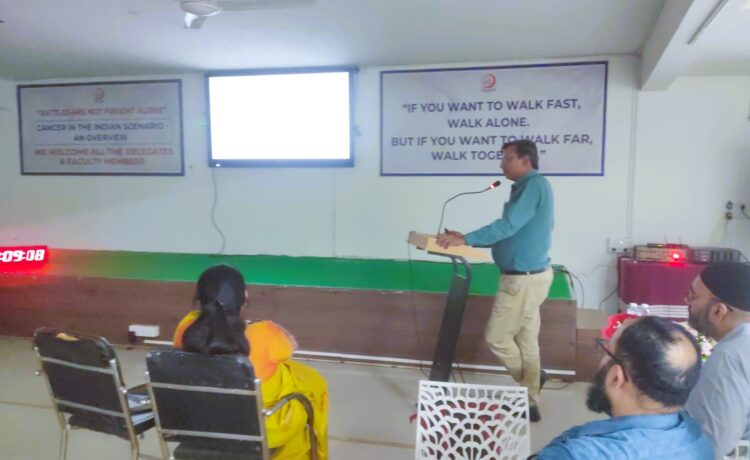
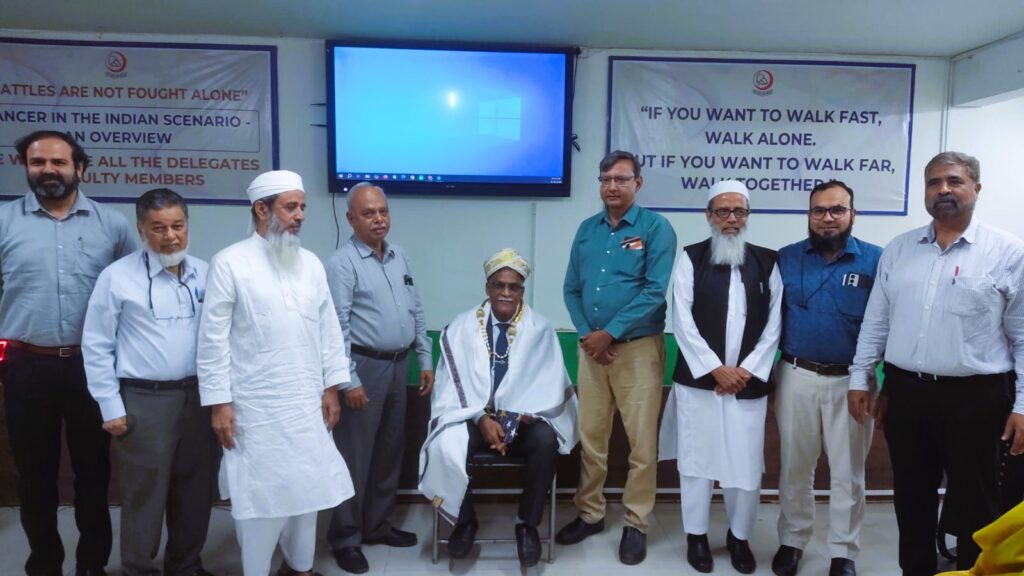
Bengaluru: India bears nearly one-third of the global oral cancer burden, recording approximately 274,000 new cases and 52,000 deaths annually. Experts highlighted these alarming statistics during an extensive overview titled “Cancer In The Indian Scenario,” conducted by the Shifaa Institute Of Post Graduate Medical Sciences and Shifaa Health Foundation Trust.
A Growing Crisis in Karnataka
Data reveals stark regional variations in cancer prevalence across Karnataka, with Belgaum recording 18,082 cases and Bengaluru emerging as a massive hotspot with 48,339 cases. Nationally, lip and oral cavity cancers rank as the leading malignant sites for men, accounting for 104,661 cases, while remaining a prominent threat among women with 31,268 recorded cases.
For Media Updates: +91-93531 21474 [WhatsApp] | indianowme@gmail.com
The Deadly Triggers
The primary driver remains tobacco consumption, though risk profiles vary geographically. Clinicians warn that combined habits exponentially multiply risks: while smoking alone increases oral cancer risk 18 times, a combination of smoking, alcohol, and betel nut spikes the risk by a staggering 123 times.
“Geographic habits heavily dictate the common areas of manifestation; for instance, the tongue is highly vulnerable in South India due to localized habits like betel-quid chewing,” noted Dr. Nadimul Hoda, Professor & HOD of Oral Oncology at the Kidwai Memorial Institute of Oncology. “Furthermore, non-tobacco factors, such as sharp teeth causing chronic, unhealed mucosal irritation, cannot be ignored as strong local triggers.”
Early Detection and Multimodal Care
Medical experts emphasize that early detection is paramount to reducing mortality. Potentially malignant disorders, such as Leukoplakia and Oral Submucous Fibrosis, often precede fully developed Squamous Cell Carcinoma. Modern diagnostics rely on advanced imaging—including contrast MRI, CT scans, and PET-CT—followed by an incisional biopsy to measure the exact Depth of Invasion (DOI).
For advanced stages (III & IV), a multimodal treatment approach is essential. Surgeons strictly utilize the “4 R Principle”—Resect, Reconstruct, Rehabilitate, and Early detection of Recurrence. Wide en-bloc excision remains the preferred initial intervention to achieve clear surgical margins and secure local disease control.
The Path Ahead
With global cancer cases projected to hit 27 million by 2040, medical professionals advocate for a robust three-tiered prevention strategy focusing on awareness, mass screening, and comprehensive rehabilitation.
“Treating the tumor is only half the battle won,” Dr. Nadimul Hoda emphasized. “True success lies in post-treatment management, which demands regular follow-ups every few months, extensive speech and physical therapy, and absolute abstinence from tobacco and alcohol to prevent loco-regional recurrence.”












Very interesting info!Perfect just what I was searching for!