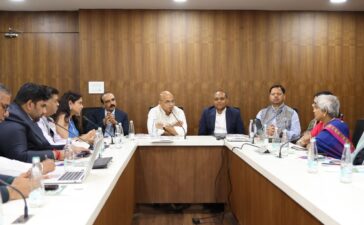
Milli Council Backs Mamata Amid Voter Roll Anxiety in Bengal
KOLKATA — As West Bengal prepares for the decisive final phase of its 2026 Assembly Elections, the All India Milli Council (AIMC) has thrown its weight behind Chief Minister Mamata Banerjee, while simultaneously sounding an alarm over “large-scale” voter deletions that have left many residents in a state of panic.
With 142 constituencies heading to the polls on April 29, the Council’s endorsement of the Trinamool Congress (TMC) comes at a high-stakes moment. Vice President Moulana Yaseen Usmani expressed deep concern over the Special Intensive Revision (SIR) of electoral rolls, which he claims has led to the removal of lakhs of names.
“The deletion of names has shaken public confidence and created an atmosphere of fear across West Bengal,” Usmani stated. “Citizens who have lived and voted here for generations are being forced to prove their identity and democratic rights. This must be addressed with full transparency and urgency.”
A Question of Identity
The Council noted that the anxiety spans across communal lines, affecting both Hindu and Muslim families. Usmani characterized the issue as more than just a clerical error, calling it a challenge to “dignity, belonging, and constitutional rights.” He pointed out that many of those affected belong to families who have tilled Bengal’s land and shaped its cultural identity for centuries.
To counter this atmosphere of uncertainty, the AIMC is calling for a massive turnout. Following an impressive 93 percent turnout in the first phase on April 23, the Council is urging the remaining voters to show up at the booths to “dispel fear and reaffirm their faith in democratic values.”
The Case for Continuity
In explaining its support for the TMC, the AIMC pointed to a track record of stability and inclusive growth. Despite the heated political rhetoric typical of election season, the Council cited official data to argue that West Bengal remains a powerhouse in the agrarian and social sectors.
Economic Strength: The state remains a top producer of rice (contributing 13% of India’s output), potatoes, and fish, while dominating the jute industry with nearly 80% of national production.
Social Welfare: According to NITI Aayog estimates, West Bengal’s multidimensional poverty levels remain lower than the national average.
Public Safety: Citing NCRB data, the Council highlighted that the state’s crime rate is significantly below the national average, with Kolkata repeatedly ranked as one of India’s safest cities.
“At this critical juncture, the people of Bengal must come together to protect both their democratic rights and their shared heritage,” Usmani said.
Guarding Against Polarization
The Council also issued a stern warning against attempts to polarize the electorate through narratives surrounding food, religion, and migration. On the sensitive issue of citizenship, the AIMC advocated for a “data-driven approach,” urging authorities to make verified records of illegal residents public rather than relying on unverified claims that terrorize legitimate citizens.
As the campaign enters its final hours, the AIMC’s message is clear: experienced leadership is required to navigate these social tensions. For the Council, Mamata Banerjee remains the best-positioned leader to safeguard the state’s cultural identity and ensure a “peaceful, inclusive, and harmonious” future.