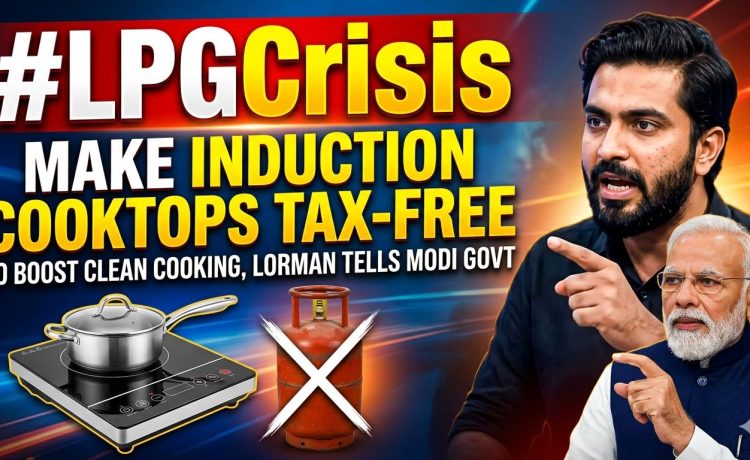
Industry urges zero GST on induction cooktops to boost clean energy adoption
New Delhi: A leading kitchen equipment manufacturer has called on the central government to eliminate the Goods and Services Tax (GST) on induction cooking systems, arguing that the move would accelerate India’s transition to clean energy while reducing the country’s dependence on imported fossil fuels.
Dr S N Chandra Mouli, Director of Lorman Kitchen Equipments Pvt Ltd, has written to Prime Minister Narendra Modi and Union Finance Minister Nirmala Sitharaman urging a zero GST rating on induction technology, which currently attracts an 18 per cent tax slab.
“Inductions are eco-friendly and energy efficient, which will also help reduce the import of fossil fuels. If GST can be reduced or even zero-rated, it will encourage more users to adopt this technology,” Dr Mouli said.
The appeal comes at a time when India is actively pursuing cleaner alternatives across sectors to meet its climate commitments and reduce the financial burden of energy imports. Induction cooking systems convert a higher proportion of electrical energy directly into heat compared to conventional methods, resulting in faster cooking and lower energy wastage.
According to Dr Mouli, promoting induction cooking aligns with India’s broader policy objectives of adopting energy-efficient technologies. Increased adoption could meaningfully reduce consumption of liquefied petroleum gas (LPG) and other fossil fuels, many of which are imported, thereby strengthening energy security.
Beyond environmental benefits, the technology offers practical advantages for Indian kitchens. Induction cooktops eliminate open flames and reduce the risk of gas leaks, making them particularly suitable for high-rise apartments, hostels, hospitals, and institutional kitchens where safety is paramount.
Dr Mouli emphasised that a supportive tax structure would have multiplier effects across the economy. “Lowering the GST rate could accelerate the adoption of induction systems across households, hotels, restaurants and cloud kitchens, helping them reduce operational energy costs,” he noted.
The industry executive also pointed to potential manufacturing gains, suggesting that zero-rated GST would encourage domestic production of induction equipment while promoting environmentally sustainable cooking practices.
With cloud kitchens and commercial food services expanding rapidly in urban India, making energy-efficient technology more affordable could significantly impact the sector’s carbon footprint and operating expenses, industry analysts suggest.