The ₹38,000 Crore Question: Bengaluru Debates Lack of Transparency in Massive Public Spending
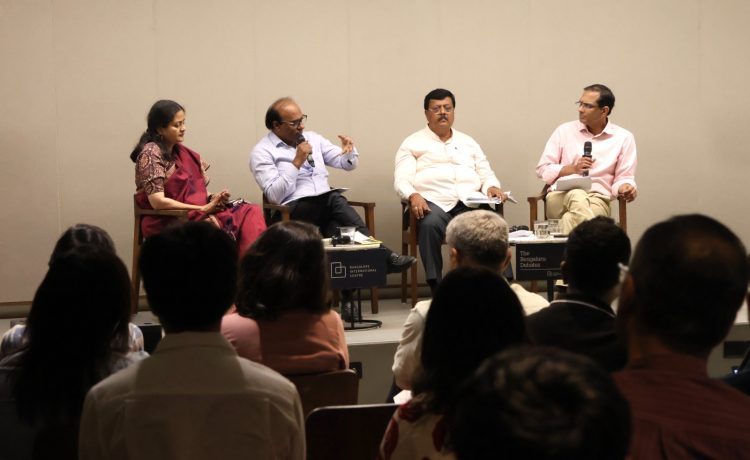
CITY DESK | Bengaluru: Every morning, Bengaluru wakes up to a familiar paradox: a city hailed as a global tech titan, yet one consistently throttled by gridlocked traffic, seasonal flooding, and crumbling asphalt. On April 11, at the Bangalore International Centre (BIC), a gathering of policymakers and urban experts posed a blunt question: If the city is spending over ₹100 crore every single day, why can’t the average resident see where it’s going?
The third session of The Bengaluru Debates, a dialogue series by BIC and Janaagraha, centered on a startling reality. According to a new discussion paper, “Public Expenditure in Bengaluru: The Case for Radical Transparency,” an estimated ₹38,000 crore was funneled into the city in the 2021–22 fiscal year. Yet, this figure exists in no official ledger. It had to be painstakingly reconstructed by researchers from 70 different documents across a dozen public authorities.
₹38,000 ಕೋಟಿ ವೆಚ್ಚದ ಪ್ರಶ್ನೆ: ಬೆಂಗಳೂರಿನ ಸಾರ್ವಜನಿಕ ಹಣದ ಪಾರದರ್ಶಕತೆ ಬಗ್ಗೆ ತೀವ್ರ ಚರ್ಚೆ
The 80% Shadow
The crux of the accountability crisis lies in who controls the purse strings. The report reveals that only 20% of city spending is managed by the Bruhat Bengaluru Mahanagara Palike (BBMP)—the only body directly accountable to voters. The remaining 80% is swallowed by parastatal agencies like the BWSSB, BESCOM, and BMTC.
These agencies, which operate with little to no legal obligation to disclose their finances, currently share only about 34% of their fiscal data.
”Transparency is the oxygen of democracy,” noted Abdul Wajid, President of the Bengaluru North District Congress Committee. “When people feel excluded from decision-making, trust in institutions erodes. We must ensure citizens have a meaningful voice to restore confidence in urban governance.”
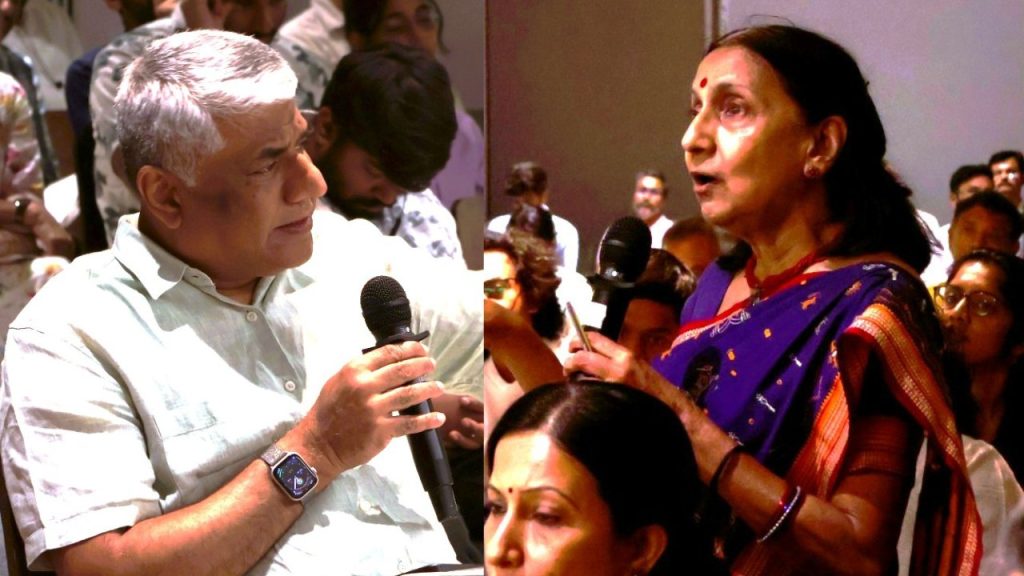
Beyond the Dashboard
The debate moved beyond mere data entry, arguing that transparency must be “radical”—meaning project-level details, contractor names, and ward-wise spending should be accessible by default, not via RTI requests.
Srikanth Viswanathan, CEO of Janaagraha, emphasized that this isn’t just about accounting; it’s about rebuilding a broken social contract. “Every citizen should know where exactly public funds are going, for what purpose, and what got achieved with it,” Viswanathan said. “Radical transparency is a minimum condition to build trust.”
However, the panel warned against viewing technology as a silver bullet. Meera K, co-founder of the Oorvani Foundation, pointed out that as the city faces mounting climate and infrastructure challenges, “data-driven transparency is essential to building resilient systems.”
A Call for Grassroots Power
For former Leader of the Opposition Padmanabha Reddy, the solution must be local. He argued that the current centralization of power leaves residents in the dark even as civic issues mount. “Transparency must begin at the grassroots,” Reddy said. “While radical transparency is essential, it must go hand-in-hand with strengthening local self-governance.”
The takeaway from the session was clear: until the “invisible” ₹38,000 crore is brought into the light through a consolidated public dashboard and empowered ward committees, Bengaluru’s residents will continue to pay the price—both in taxes and in quality of life.