Declining Representation and Rising Communal Polarisation Raise Questions About Democratic Health
As Muslim political representation in India hits new lows and identity-based polarisation deepens, a critical debate has emerged on the future of secular politics and minority empowerment in the world’s largest democracy.
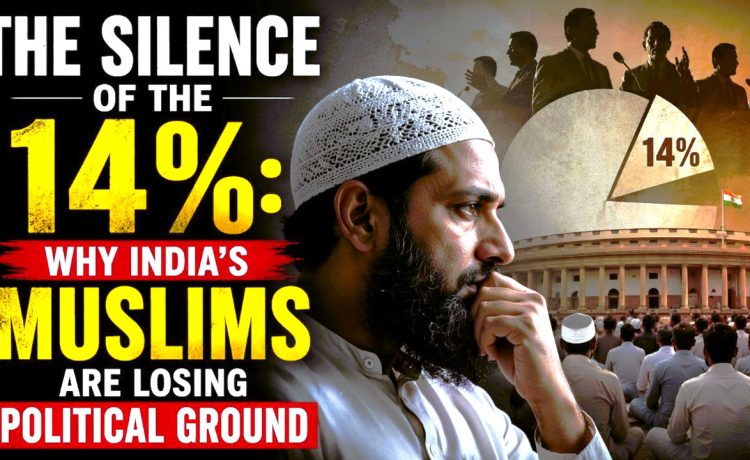
The political marginalisation of India’s Muslim community—amounting to nearly 14 percent of the population but holding barely five percent of Lok Sabha seats—has sparked renewed debate over the quality of democratic representation in the country. While the post-1980s era saw a steady decline in Muslim political presence, recent by-elections in Karnataka and local body results in Maharashtra have exposed deepening fault lines. As major parties hesitate to field Muslim candidates, and communal narratives gain traction, a growing number of voices within the community are calling for a strategic shift: away from symbolic identity politics and toward a broader, justice-oriented secular alliance.
A Legacy of Exclusion
India’s Constitution envisioned a nation built on citizen equality, not caste or religious identity. Yet, decades after independence, the political reality for Muslims tells a different story. From a peak in Muslim parliamentary representation in 1980, numbers have steadily fallen. The 2024 Lok Sabha elections returned only 24 Muslim members—a fraction of what population proportions would suggest.
This trend is mirrored in state legislatures. Uttar Pradesh, Madhya Pradesh, Ra
jasthan, and even Karnataka have seen Muslim representation fall well below demographic weight. The Sachar Committee Report (2006) had already warned that political underrepresentation was a key driver of the community’s social, educational, and economic backwardness.
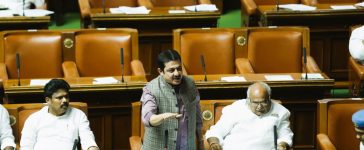
“In a democracy, real representation must come through direct elections. But minorities, especially Muslims, are being systematically denied fair opportunities,” noted Guranna Gowda Patil of Zhalaki in a letter to Prajavani (March 24, 2026). “If we ignore minorities, how will capable political leaders emerge from that community?”
Media Updates: +91-93531 21474 [WhatsApp] | indianowme@gmail.com
The Myth of a ‘Uniform Muslim Vote’
One of the most persistent fallacies in Indian political discourse, experts argue, is the idea of a monolithic Muslim political identity. India’s Muslim population is deeply diverse—divided by language, class, occupation, caste-like hierarchies, and regional cultures. Farmers, weavers, labourers, entrepreneurs, students, and professionals do not share identical political priorities.
“The moment a person declares ‘I am a Muslim’, they are reduced to a religious label,” writes political commentator Qasim Saab. “That declaration triggers suspicions about their patriotism, loyalty, and nationalism. This is the tragedy of contemporary Indian politics.”
Attempts to homogenise Muslims, he argues, only serve to strengthen polarising narratives. A healthy Muslim politics, therefore, must embrace multiple political choices and forge alliances with other marginalised groups—Dalits, Adivasis, OBCs—around shared economic and social justice demands.
Historical Lessons and Lost Ground
Karnataka’s political history offers a useful contrast. Leaders like Jaffer Sharif, Nazir Sab, and Aziz Seth once played prominent roles based on competence and public service, not religious identity. But with the rise of Hindutva politics, Muslim leadership has been progressively pushed to the margins.
Issues such as the Hubballi Eidgah dispute, Bababudangiri controversy, cattle trade restrictions, ‘love jihad’ allegations, and opposition to Tipu Jayanti have been strategically deployed to polarise electorates. The result has been a steady erosion of the view of Muslims as equal fellow citizens.
The Owaisi Factor and Faith-Based Parties
In this vacuum, parties like Asaduddin Owaisi’s All India Majlis-e-Ittehadul Muslimeen (AIMIM) and smaller faith-based outfits have attempted to mobilise Muslim voters. Yet, despite large crowds at public rallies, AIMIM has struggled to convert enthusiasm into electoral seats—except in pockets where Muslim populations exceed 30 percent.
Recent local body elections in Maharashtra provided a striking example. In the Malegaon Corporation, a newly formed party whose name’s initials spelled “ISLAM” won 35 of 80 seats, while Owaisi’s party secured 22. Mainstream secular parties were reduced to insignificance. While BJP-affiliated groups used this result to argue that Muslims abandon secular parties whenever they gain demographic strength, Owaisi supporters claimed it proved the viability of independent Muslim political platforms.
However, critics note that neither Owaisi’s party nor its rivals have presented coherent programs on economic policies, employment, housing, or health. “Their survival is based solely on identity, not governance,” said a political analyst speaking on condition of anonymity.
Double Standards in Labelling Parties
A more subtle but equally significant issue, observers point out, is the inconsistent application of political labels. The Indian National Congress has had many Brahmin leaders but is rarely called a “Brahmin party”. The CPI(M) and BJP have also seen substantial Brahmin leadership without being branded as community-based outfits. Similarly, SP, RJD, JD(U), and JD(S) are led by Yadavs or Vokkaligas but are not reduced to caste labels.
Yet, parties like BSP, RPI, and DPI are immediately tagged as “Dalit parties”, while AIMIM, AIUML, and SDPI are often labelled “communal” or “Muslim fundamentalist”. This double standard, critics argue, undermines constitutional equality.
“A party speaking for a community’s rights should not be viewed with suspicion solely on that basis,” Saab writes. “The Constitution guarantees every citizen the freedom to organise politically for their community’s rights.”
The Way Forward: From Identity to Solidarity
As India approaches a new electoral cycle, the question of Muslim political future remains unresolved. Some argue for independent Muslim political platforms; others insist on integration into broader secular alliances. What is increasingly clear, however, is that politics based solely on religious identity—whether majority or minority—has reached a dead end.
The true test of democracy, as the article’s author notes, lies not in majority power but in minority confidence. The problem of Muslim political representation is not merely a community issue. It is a question about the future of India’s secular soul.
Conclusion:
If India’s constitutional dream of equal citizenship is to survive, the political marginalisation of any community cannot become normalised. Whether through reformed secular parties or new alliances, the urgent need is for a politics that transcends religious labels and addresses real issues: jobs, education, housing, health, and dignity for all. Without that, the democratic deficit will only deepen, and the space for polarisation will only grow.