JAIN University Conference Maps Future of Resilience Through AI and Sustainability
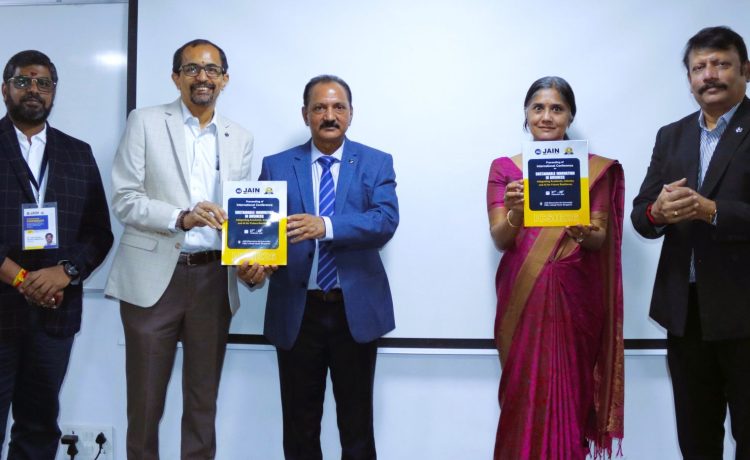
BENGALURU – Academic leaders and global industry experts converged at JAIN (Deemed-to-be) University on February 27, 2026, for the “International Conference on Sustainable Innovation in Business.” The event served as a critical platform for addressing how organizations can bridge the gap between rapid technological advancement and environmental stewardship.
Redefining Business Intelligence
The core sentiment of the conference centered on the necessity of moving beyond surface-level technology adoption. Dr. Dinesh Nilkant, Pro Vice Chancellor of JAIN (Deemed-to-be) University, emphasized that future-ready organizations must be as environmentally conscious as they are digitally sophisticated. “AI will give brain, sustainability will teach humanity, and both together will save the business,” he noted, framing the dual approach as the only viable path for long-term survival.
Dr. Jitendra Kumar Mishra, Vice Chancellor and Registrar, challenged the traditional obsession with profit, warning against siloed thinking. “Technology without sustainability risks ecological collapse. Business without ethics loses legitimacy,” he cautioned, urging for a transition from mindless competition to collaborative resource optimization.
“AI ಮೆದುಳಾದರೆ, ಸುಸ್ಥಿರತೆಯೇ ಮಾನವೀಯತೆ”: ವ್ಯವಹಾರ ಉಳಿಸಲು ತಂತ್ರಜ್ಞಾನ ಮತ್ತು ಮೌಲ್ಯಗಳ ಸಮ್ಮಿಲನ ಅಗತ್ಯ
Bridging the “Valley of Death”
A recurring theme throughout the sessions was the disconnect between academic research and commercial application. Business journalist Archana Rai highlighted the practical challenge of scaling knowledge into impact. “Integration is not just bringing AI and sustainability into the room; it is about how we take the research paper and scale it to an industrial level,” she explained, adding that analytics must serve as the primary guide for purposeful action.
For Media Updates: +91-93531 21474 [WhatsApp] | indianowme@gmail.com
Dr. Ravindran Balakrishnan, Regional Finance Director at Omnicom Media Group, underscored this “valley of death” between research and products. He pointed to a shifting corporate landscape where non-financial metrics—such as sustainability and value creation—now account for 70% of multinational reports, marking a departure from pure shareholder-return models.
AI as Creative Disruption
Framing AI as a force of “creative disruption,” Prof. Dr. Kaup Mohamed of London American City College noted that while AI drives efficiency, it must not function in isolation. “AI looks for sustainability in terms of providing comfort, convenience, and speed. But it must be blended with human interaction and accountability,” he said.
The conference concluded with a call for actionable strategies. With 230 research papers presented, the event demonstrated that ethical AI and sustainability are no longer merely aspirational; for the modern enterprise, they have become strategic imperatives. As Convenor Dr. Sakthi Kamal Nathan Sambasivam remarked, the robust attendance reflects a collective commitment to building a more resilient, responsible innovation ecosystem.