
Youth Uprising Signals Shift in Public Mood, Says All India Milli Council Leader
Shaikh Nizamuddin Says Spontaneous Student Mobilisation Reflects Growing Democratic Assertion Beyond NEET and Paper Leak Issues
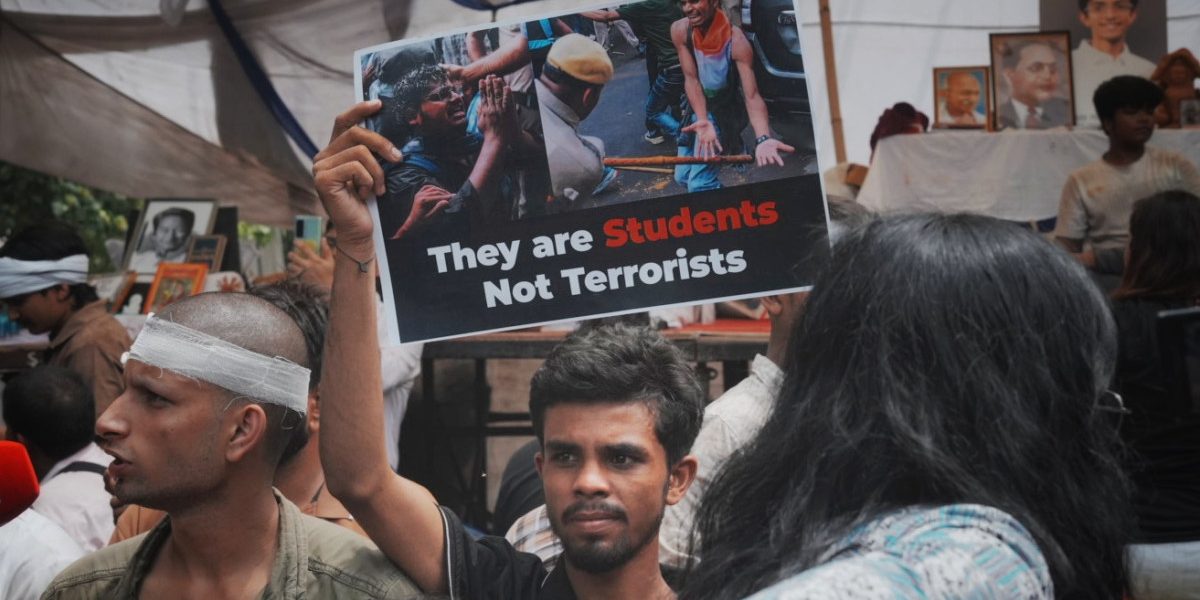
New Delhi: The spontaneous mobilisation of thousands of young people across Delhi has marked a significant turning point in India’s democratic landscape, according to Shaikh Nizamuddin, Assistant General Secretary of the All India Milli Council, who described the youth-led protests as a powerful expression of public concern extending far beyond the NEET paper leak controversy.
Reflecting on the large gatherings at Jantar Mantar, Parliament Street and surrounding areas, Nizamuddin said the overwhelming participation of young people from across the country demonstrated a growing sense of responsibility towards the nation’s future.
“It was remarkable to witness thousands of young people, many with no political affiliation or ideological background, voluntarily occupying the streets through the night. Their concern was not limited to examinations but reflected a deeper anxiety about the direction of the country,” he said.
‘A New Democratic Awakening’
Nizamuddin described the movement as evidence of an awakening among India’s youth and middle class, asserting that citizens who had remained politically detached for years were now actively participating in democratic discourse.
“The youth may not have consciously studied Gandhi or Ambedkar, yet they embraced the spirit of non-violence and peaceful resistance. Their determination challenged the arrogance of power and demonstrated that democratic values remain alive,” he said.
He also credited the participation of Left-leaning student groups, the Jai Bhim movement and independent social media platforms for strengthening the protests and shaping public discourse.
“Social media has emerged as a credible alternative narrative, challenging sections of the mainstream media and amplifying the voices of ordinary citizens,” he observed.
Government’s Political Miscalculation
Nizamuddin alleged that the government had underestimated the depth of public dissatisfaction, warning that attempts to dismiss or ignore growing public sentiment could prove politically costly.
“This movement is no longer confined to demands for the resignation of the Education Minister or concerns over paper leaks. It has evolved into a wider expression of public dissatisfaction over governance during the past decade,” he said.
He further argued that traditional political narratives, including attempts to consolidate support through polarising issues, appeared to be losing their effectiveness among younger voters.
Call for Peaceful Democratic Engagement
While acknowledging reports of police excesses during the protests, Nizamuddin praised the restraint shown by demonstrators and urged that the movement remain peaceful and democratic.
“The patience and maturity displayed by the youth deserve appreciation. Peaceful protest is the strength of democracy, and maintaining discipline will ensure that the movement retains its moral force,” he said.
He also called upon opposition parties to engage responsibly with the emerging public sentiment by providing constructive leadership while preserving the movement’s democratic and peaceful character.
“The voice of India’s youth represents hope, accountability and democratic participation. It must be heard with sincerity rather than suppressed through intimidation,” Nizamuddin added.