From Karnataka to the National Stage: Former MP Hanumanthappa Recalls Syed Ashraf’s Remarkable Political Journey
Former MP recalls Ashraf’s journey from grassroots political activism to national prominence, highlighting his relationships with Rajiv Gandhi, V.P. Singh, Nijalingappa and other influential leaders. Veteran Congress leader says Syed Ashraf’s determination, political vision and ability to build relationships helped him emerge as a respected figure in public life.
ಕರ್ನಾಟಕದಿಂದ ರಾಷ್ಟ್ರ ರಾಜಧಾನಿವರೆಗೆ: ಸ್ವಯಂ ನಿರ್ಮಿತ ರಾಜಕಾರಣಿಯಾಗಿ ಸೈಯದ್ ಅಶ್ರಫ್ ಅವರ ಯಶೋಗಾಥೆ
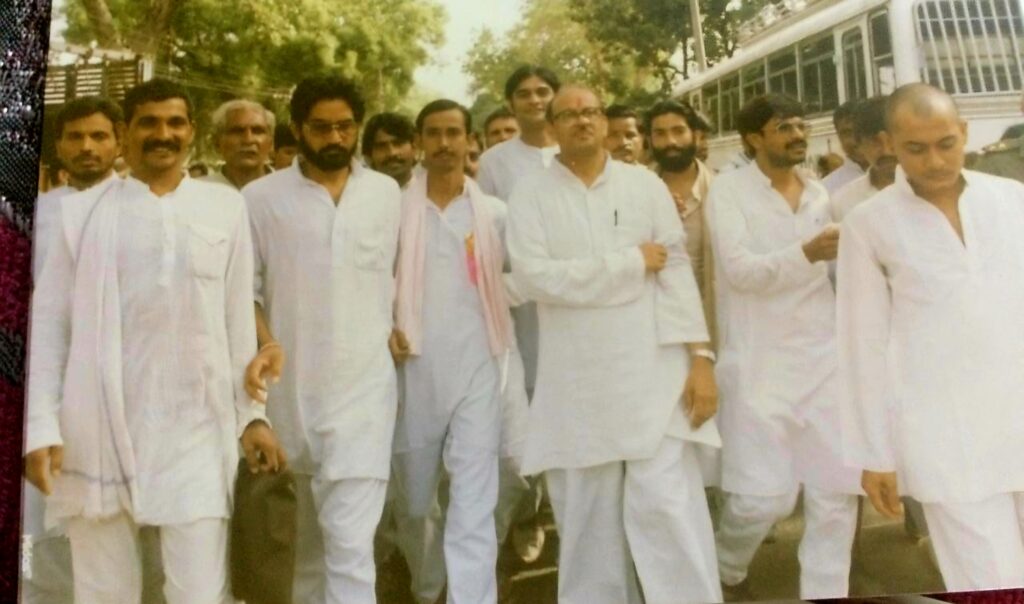
Bengaluru: Veteran Congress leader and former Member of Parliament H. Hanumanthappa has described Syed Ashraf as a self-made political leader whose determination, networking skills and independent spirit enabled him to rise from local political circles in Karnataka to become a respected figure with influence in New Delhi.
Speaking about Ashraf’s political journey, Hanumanthappa recalled that their association dates back to the period when he was appointed General Secretary of the Karnataka Pradesh Congress Committee (KPCC) during the tenure of former Chief Minister Devaraj Urs.
“After becoming General Secretary, I shifted to Bengaluru. During that period, I became friends with Rajagopal, who later joined me in the Rajya Sabha. It was through such political and social circles that Syed Ashraf was introduced to me,” Hanumanthappa said.
According to him, Ashraf had already built a reputation as an energetic and well-connected young political worker, particularly in Chitradurga and surrounding regions.
“Ashraf knew a large number of people even in those days. He was active, involved and constantly engaged with people. That is what first caught everyone’s attention,” he recalled.
A Self-Made Political Journey
Hanumanthappa said one of Ashraf’s most distinguishing qualities was his ability to create opportunities for himself rather than depending on others.
“He received some initial support from Mysore Minister Aziz Sait, but he never depended on anybody for long. He was capable of building himself up and creating his own identity. That is why I always describe him as a self-made man,” he said.
According to Hanumanthappa, Ashraf’s influence gradually expanded beyond Bengaluru and Karnataka.
“He was not content with remaining within one political boundary. His influence grew steadily, and eventually he shifted his focus to Delhi, where he built a place for himself through hard work and relationships,” he added.
Building National-Level Relationships
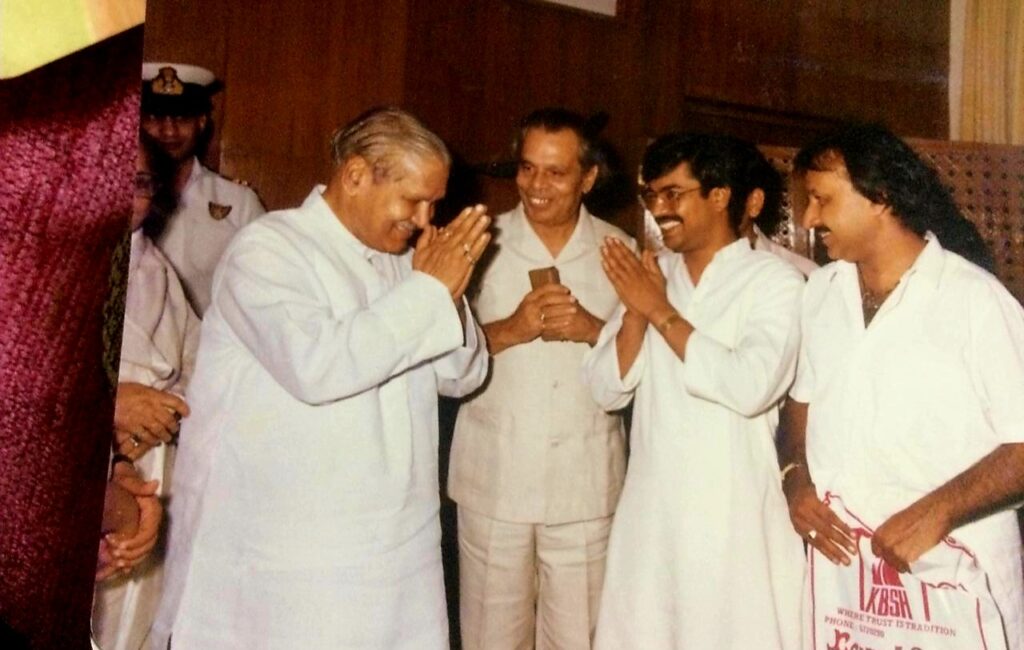
Hanumanthappa noted that Ashraf possessed a rare ability to connect with influential leaders across political and social circles.
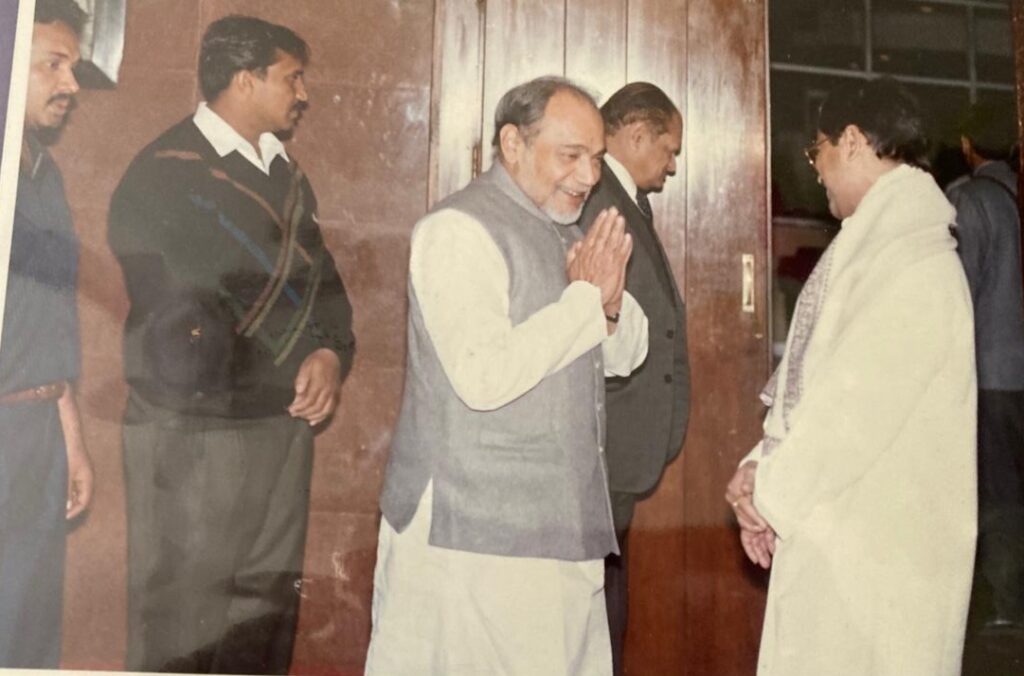
“Ashraf’s family enjoyed a close relationship with former Prime Minister V.P. Singh and his family. He was also well known to Mrs. V.P. Singh. These relationships helped him understand national politics at a deeper level,” he said.
His political network expanded further when he came into contact with former Prime Minister Rajiv Gandhi.
“Rajiv Gandhi once made a phone call asking him and those around him to take care of Ashraf. That itself showed the importance and goodwill Ashraf enjoyed within the political establishment,” Hanumanthappa said.
He also acknowledged the support Ashraf received from senior leaders such as Aziz Sait and later from Jaffer Sharief.
“Aziz Sait gave him initial assistance, and later Jaffer Sharief became closely associated with him. However, Ashraf always preferred carving out his own path rather than relying on others,” he observed.
Refused to Be Limited
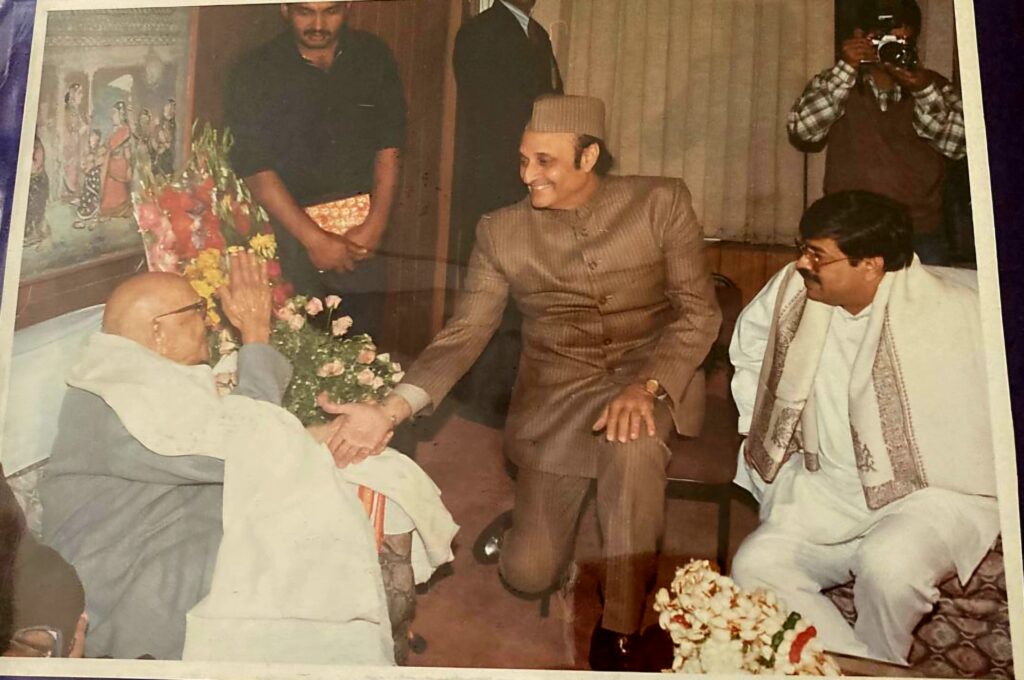
Hanumanthappa described Ashraf as someone who never liked being confined by limitations or political boundaries.
“He was never a person who could be restricted. Even today, he dislikes being constrained. He always preferred exploring possibilities and taking initiatives on his own,” he said.
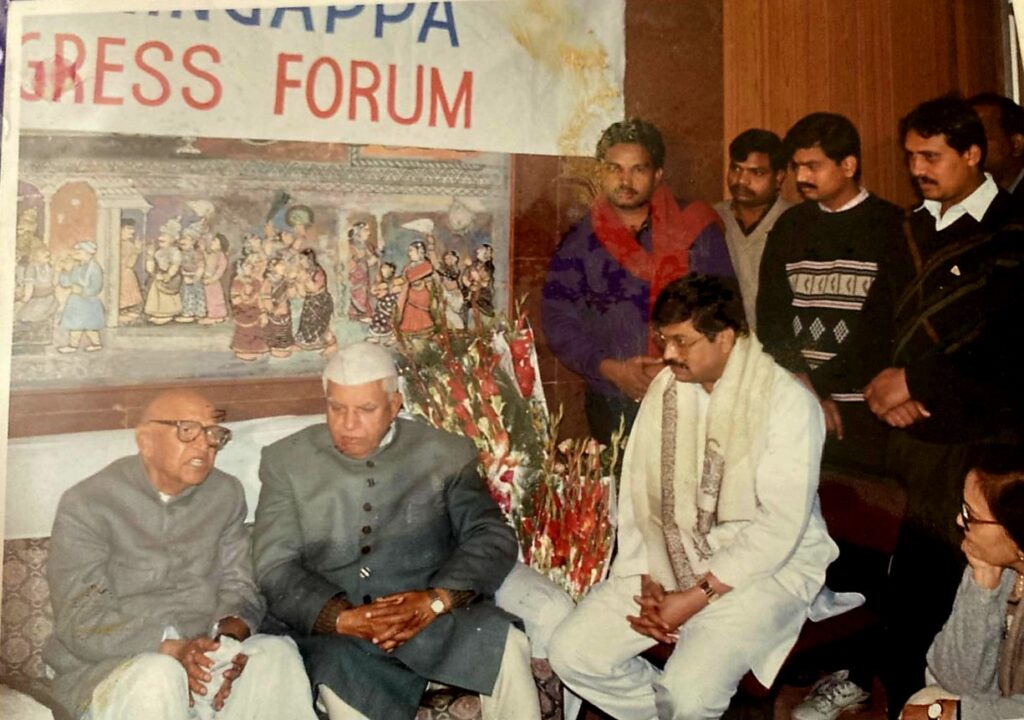
The former MP recalled Ashraf’s close association with former Chief Minister S. Nijalingappa during the veteran leader’s final years.
“During Nijalingappa’s later years, when many others were absent, Ashraf would frequently travel to Bengaluru. At that time, neither Rajasekhar nor several other family members were around. Ashraf regularly visited and spent considerable time working on initiatives connected to preserving history and documenting the biography of Sardar Vallabhbhai Patel,” Hanumanthappa said.

‘A Potential Man and a Go-Getter’
Recalling conversations from that period, Hanumanthappa said several senior leaders recognised Ashraf’s abilities and future potential.
“There was a time, during Nijalingappa’s era, when discussions often revolved around identifying people with leadership potential. I remember Hanumanthappa and others remarking that Ashraf was a ‘potential man’. I fully agreed with that assessment,” he said.
“I have always considered him a go-getter and a very good person. Nijalingappa himself shared a similar opinion about Ashraf. Such praise from a statesman of his stature was not given lightly.”
Hanumanthappa said Ashraf’s ability to take initiative and get things done distinguished him from many of his contemporaries.
The Nijalingappa Memorial Episode
One of the incidents that best reflected Ashraf’s determination, according to Hanumanthappa, involved efforts to preserve the residence of former Chief Minister Nijalingappa as a memorial.
He recalled that around 2011 there were discussions regarding the acquisition of Nijalingappa’s residence and its conversion into a memorial. At one stage, then Chief Minister B.S. Yediyurappa had expressed interest in acquiring the property for that purpose.
However, despite repeated discussions and proposals, the matter remained unresolved for a considerable period.
“Nothing substantial happened for a long time. There were plans and discussions, but no real action,” Hanumanthappa recalled.
The situation changed dramatically when Ashraf stepped in.
“Ashraf announced that if the government was not willing to act, he was prepared to purchase the building himself and establish the memorial. That single statement changed everything,” he said.
According to Hanumanthappa, Ashraf’s intervention created urgency within the government machinery.
“The government moved quickly after that. Within about fifteen days, steps were taken to acquire the property. Many people believed that Ashraf’s intervention and influence played a significant role in accelerating the process.”
He also recalled that senior government functionaries advised Ashraf not to interfere further, assuring him that the matter was already under consideration.
“The Chief Minister told him not to worry and said the government was already looking into the issue. But the fact remains that Ashraf’s intervention brought renewed focus and urgency to the project,” Hanumanthappa said.
A Legacy Built on Initiative and Relationships
Summing up Syed Ashraf’s political journey, Hanumanthappa said his story demonstrates how determination, relationship-building and self-belief can help an individual rise through public life.
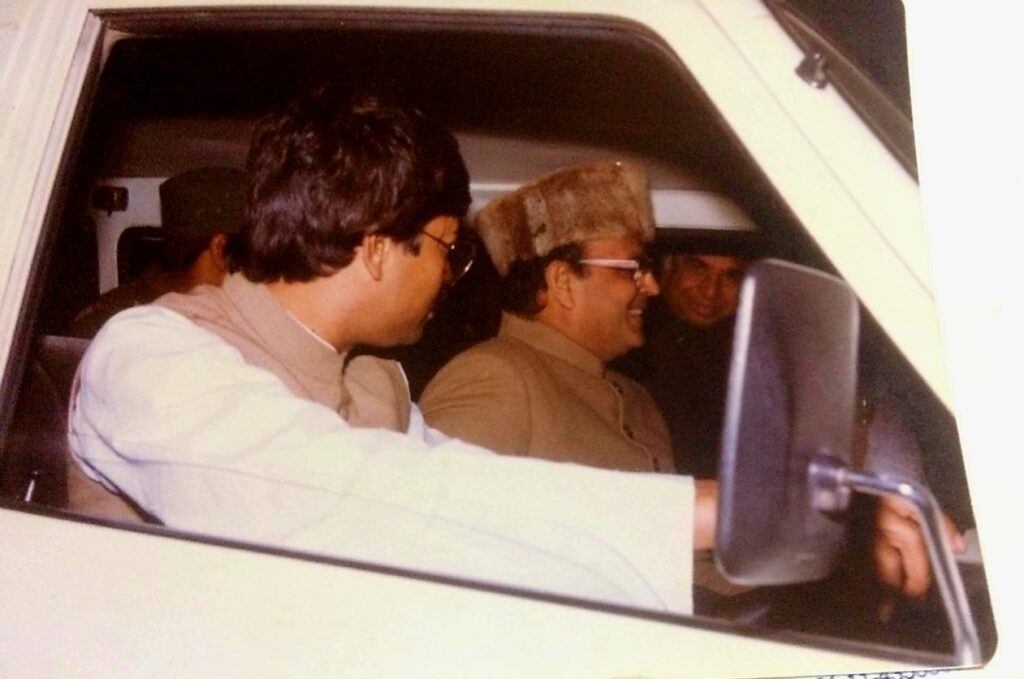
“Syed Ashraf’s journey is not merely about politics. It is a story of initiative, courage and persistence. He built relationships across generations of leaders, earned their trust, and created opportunities through his own efforts,” he said.
“He proved that a person does not have to depend entirely on patronage to succeed. Through hard work, vision and commitment, he established himself from the grassroots level and earned recognition far beyond Karnataka.”
For Hanumanthappa, Ashraf’s life remains an example of how dedication, political insight and an unwavering willingness to take initiative can transform a local activist into a figure with national relevance and enduring influence.