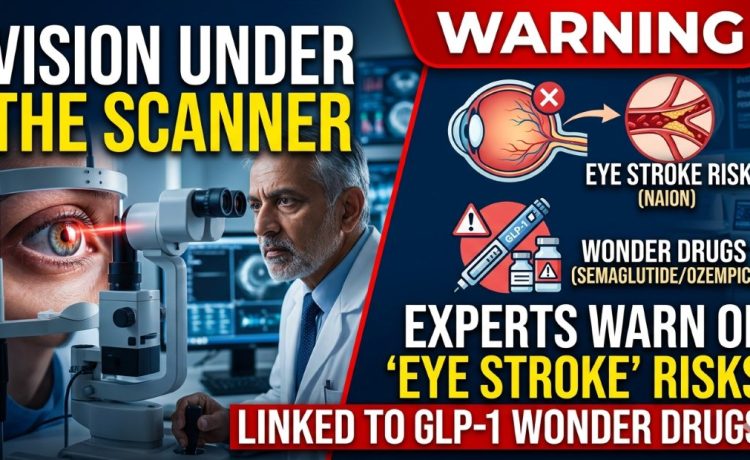
Beyond the “Wonder Drug”: Experts Urge Ocular Vigilance as GLP-1 Access Expands in India
Bengaluru – As India stands on the precipice of a pharmaceutical revolution with the widespread arrival of affordable GLP-1 receptor agonists, the medical community is issuing a vital caveat: the “wonder drugs” transforming diabetes and weight loss management require a watchful eye—literally.
Following the expiration of the key patent for Semaglutide on March 20, 2026, domestic pharmaceutical giants are poised to launch generic versions, expected to slash costs by up to 80%. While this democratizes access to life-changing treatments like Ozempic and Mounjaro, it simultaneously heightens the risk of unregulated use and a burgeoning, yet often overlooked, complication: vision impairment.
The Vision Paradox: Rapid Control vs. Retinal Stress
The very efficacy of GLP-1 drugs—their ability to induce rapid, significant reductions in blood sugar—can paradoxically trigger a temporary worsening of diabetic retinopathy. More concerning to specialists is the emerging link to Non-Arteritic Ischemic Optic Neuropathy (NAION), colloquially known as an “eye stroke.”
NAION occurs when blood flow to the optic nerve is compromised, leading to sudden, painless vision loss. While the European Medicines Agency (EMA) still classifies the condition as “very rare,” it has noted a potential two-fold increase in risk among Type 2 diabetics using these therapies.
Identifying the High-Risk Patient
Medical experts stress that the goal is not to incite fear, but to encourage precision. Individuals with pre-existing hypertension, sleep apnea, or a “crowded” optic disc anatomy are at a higher statistical disadvantage.
“This should not discourage the use of GLP-1 drugs in patients where they are medically indicated,” says Dr. Rohit Shetty, Clinician and Translational Scientist and Director of Narayana Nethralaya. “Patients should be stratified into low, medium, and high-risk categories based on their diabetic profile, eye fundus findings, and overall health.”
Dr. Shetty further advises that for those in the high-risk bracket, particularly those with vulnerable optic discs, “the use of these drugs may need to be reconsidered as a preventive step against potential ocular complications.”
The Necessity of Integrated Care
As these medications transition from high-end niche products to mainstream treatments, the traditional siloed approach to medicine is no longer sufficient. Experts are calling for a collaborative model where endocrinologists and ophthalmologists work in tandem.
“Regular eye examinations can help detect early retinal changes, allowing timely intervention and preventing long-term vision loss,” Dr. Shetty notes, emphasizing that proactive monitoring is the bridge between metabolic success and sensory safety.
A Warning Against Self-Medication
With the influx of cheaper generics, the temptation for off-label use and self-prescription is high. However, the complexity of the metabolic shift induced by GLP-1s makes professional supervision non-negotiable. For millions of Indians, the message is clear: achieving a healthier weight and stable blood sugar should not come at the cost of one’s sight.