Kannada Activists Stage Protest: Demand Mandatory Language Proficiency for Bishops in Karnataka Churches
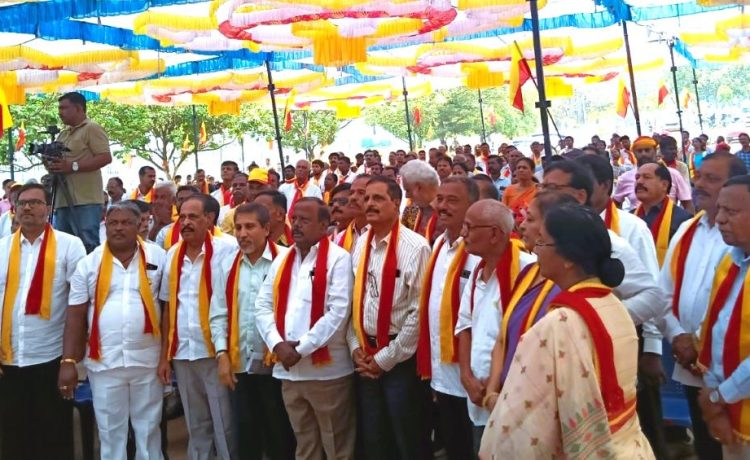
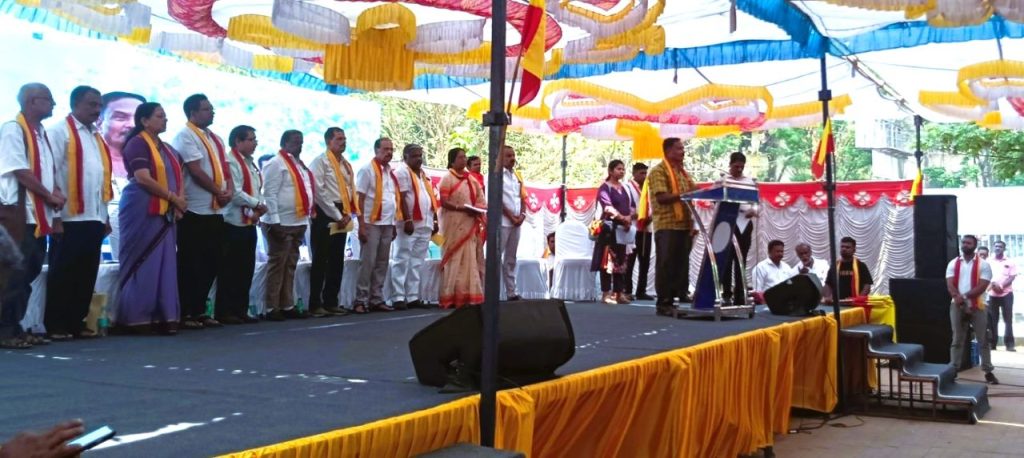
BENGALURU, March 28 — In a significant show of linguistic assertion, scores of activists and members of the Catholic community gathered at Freedom Park on Saturday to demand that bishops appointed to churches in Karnataka be made proficient in Kannada. The protest, organized by the All Karnataka Catholic Kannada Sangha, turned into a powerful platform underscoring the deep-seated sentiment that language should not become a barrier between the divine and the devotee.
Leading the charge with a mix of literary gravitas and emotional appeal, renowned writer Dr. L. Hanumanthaiah issued a stern call: any individual arriving from other states to assume the role of a bishop in Karnataka must compulsorily learn conversational Kannada for at least six months. “If this is not adhered to, the respect for the position of bishop here will be diminished,” he asserted, drawing sharp applause from the gathering.
“God and Devotee Must Speak the Same Language”
Taking center stage at the protest, Dr. Hanumanthaiah struck a deeply philosophical chord, emphasizing that a language barrier in matters of faith is an anomaly that cannot be allowed to persist. “There should be no trench between God and the devotee when it comes to language,” he said. “The common principle that should apply to all religions across the world is this: the dialogue between God and the devotee must take place in a language both understand. This is a simple, undeniable truth.”
He clarified that the movement was not about seeking Vatican’s intervention to appoint Kannadigas to global positions but was rooted in a much more immediate and local concern. “We are not asking for Kannadigas to be made bishops in Vatican City. We are demanding that in the churches of Bengaluru and across the state, Kannadigas be appointed as bishops. Even the Supreme Court cannot object to this,” he stated firmly.
Dr. Hanumanthaiah also highlighted the historic contributions of the Christian community to the Kannada language, invoking the legacy of Reverend Ferdinand Kittel, the German missionary whose monumental dictionary remains a cornerstone of Kannada literature. “Christians, through their missionaries, have worked to educate the marginalized. They taught us the importance of imparting education in the local language. It is ironic that this very principle is now lost on those occupying the highest echelons of the church,” he lamented.
He extended an olive branch, suggesting collaboration to resolve any linguistic challenges. “If there are difficulties in Kannada, let us work together to remove them. Institutions like the Kannada Sahitya Parishat and various government departments are ready to help.”
“Hindi Hegemony Must Be Opposed”
The protest also took on a broader linguistic dimension, with Dr. Hanumanthaiah voicing concerns over what he described as a growing cultural encroachment in the city. “Non-Kannadigas are attempting to occupy Kannada spaces in Bengaluru today. Hindi migrants are arriving in large numbers in search of work and sustenance. While many learn and speak Kannada, others refuse to learn it and conduct their affairs entirely in Hindi,” he observed.
He alleged that a systematic imposition of Hindi is being carried out by the central government and other states. “This imposition of Hindi must be opposed vehemently,” he urged, linking the fight for Kannada in churches to a larger battle for the language’s survival in its own homeland.
For Media Updates: +91-93531 21474 [WhatsApp] | indianowme@gmail.com
A Call for Vernacular Worship and Local Administration
Echoing the sentiments, A. Isaac, President of the All Karnataka Catholic Kannada Sangha, laid out a series of structured demands rooted in the directives of the Second Vatican Council. “According to the guidance provided by the Second Vatican Council, Kannada should be recognized as the common vernacular language in the churches of Karnataka. Regular prayers and masses must be conducted in Kannada,” Isaac demanded.
He further pressed for the establishment of a regional archdiocese and insisted that the complete administration of St. Peter’s Pontifical Seminary be reserved for the bishops of Karnataka. The protest witnessed the presence of a cross-section of Kannada activists, including S.R. Govind, President of the Dr. Rajkumar Fans Association, writers Dr. Manu Baligar and Dr. Rita, and prominent pro-Kannada campaigners such as R.N. Chandrashekhar, Dr. R.A. Prasad, V.C. Channegowda, and Padmini Nagaraj. Office-bearers of the Sangha, including Antony Raj, John Britto, Bartholomew, George Kumar, and Devakumar, also participated.
The demonstration marks a significant moment where faith, language, and regional identity converge, signaling a growing movement to ensure that the language of devotion in Karnataka remains deeply rooted in the soil of the land.