Critics Allege ‘Bloodless Coup’ as EC’s Voter Revision Sparks Disenfranchisement Fears
Bengaluru: A nationwide voter list revision by the Election Commission of India (ECI) has ignited allegations of a targeted purge, with critics describing the Special Intensive Revision (SIR) as a “bloodless political assassination” aimed at disenfranchising specific communities.
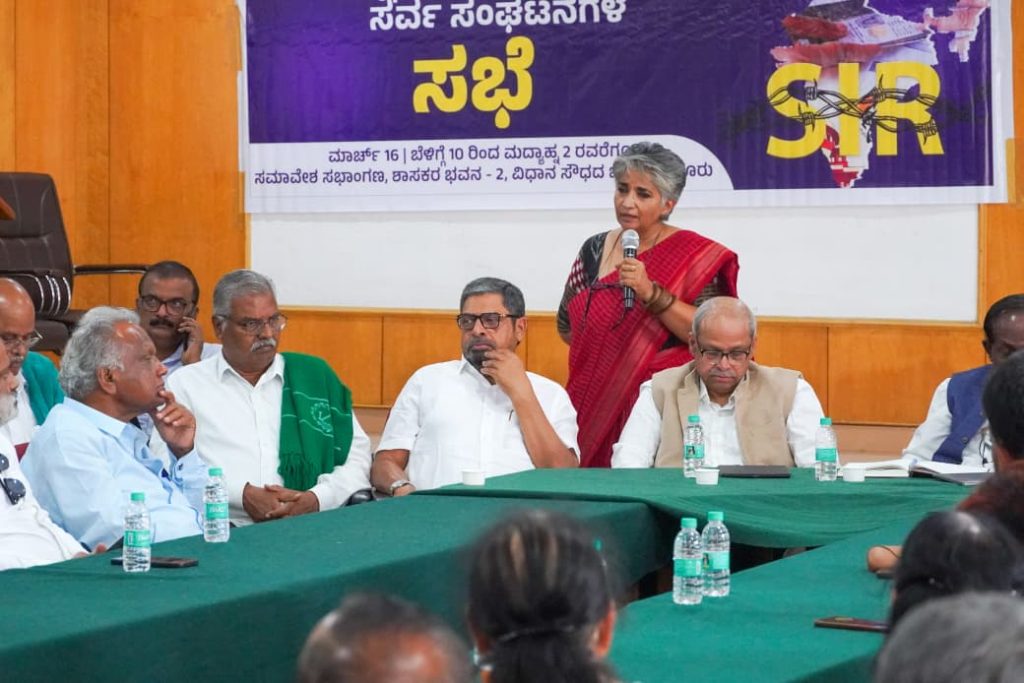
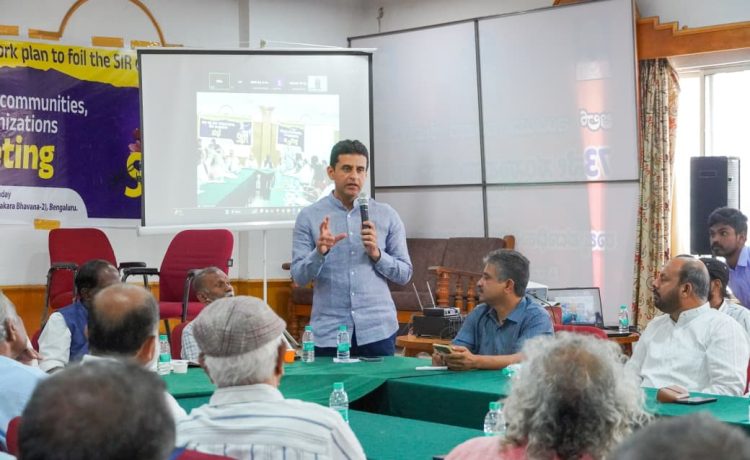
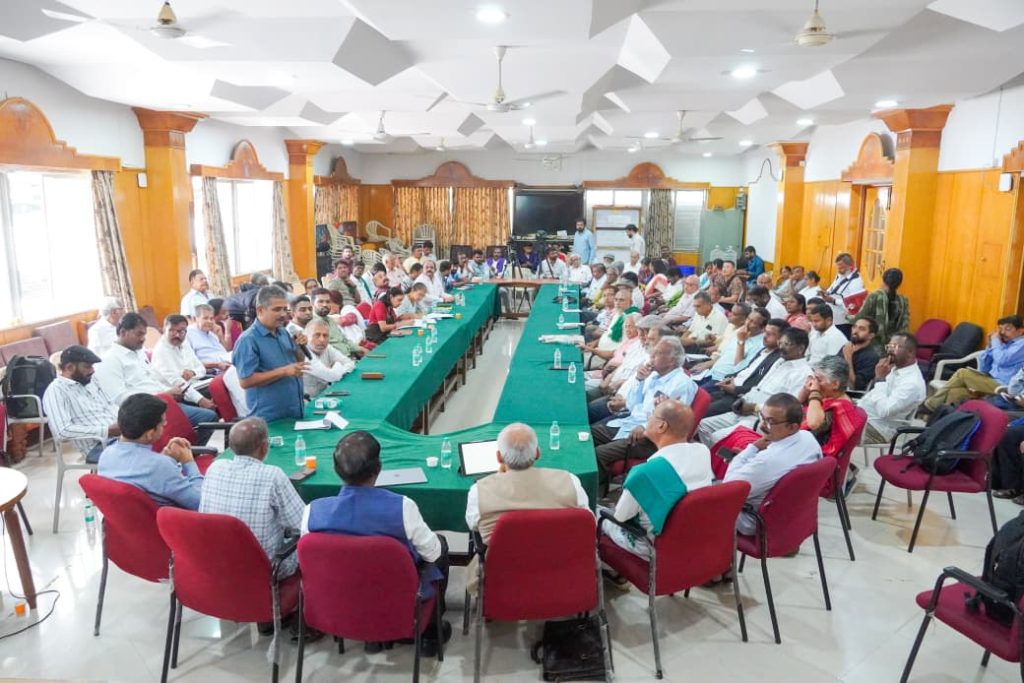
Addressing an anti-SIR consultative meeting in Bengaluru, political analyst Parakala Prabhakar warned that the exercise inverts democratic principles. “Earlier, people elected the government. Now, the government is choosing its voters,” he said, estimating that 16.5 crore voters could be dropped nationwide.
Selective Targeting and ‘NRC by Stealth’
The core controversy centers on the SIR’s methodology, which requires verification against electoral rolls from 2002-03—effectively shifting the burden of proof onto citizens. Tamil Nadu activist Thomas Franko highlighted selective application: “Assam didn’t face SIR, only regular revision. This makes political motives clear.” He alleged RSS and BJP volunteers are driving the process, pointing to Bihar where “lakhs of voters were deleted.”
The controversy has reached Parliament, with opposition MPs submitting an impeachment motion against Chief Election Commissioner Gyanesh Kumar, citing “mass disenfranchisement” and manipulation of rolls in Karnataka constituencies.
Southern Disadvantage
Prabhakar warned the revision threatens India’s political equilibrium, potentially allowing northern states like UP and Bihar to collectively overshadow the entire southern region’s parliamentary voice. “A handful of states risk drowning south India’s voice,” he cautioned.
Key Demands
The multi-party meeting passed resolutions demanding:
-
Mandatory Gram Sabha verification before finalizing lists
-
Empowerment of State Election Commissions for assembly polls
-
Current electoral rolls as the base document for all revisions
-
Public hearings for all additions or deletions
-
Reintroduction of paper ballots
Election experts attending virtually emphasized that using two-decade-old documents contravenes the Representation of the People Act, which mandates current rolls as the foundation for updates. As the ECI pushes forward, activists warn the cure may be worse than the disease—potentially scrubbing legitimate voters from the democratic canvas.