Workers, Activists Unite Against “Exploitative” Contract Labour System, Demand Dignity and Living Wages
Bengaluru, 2025 – In a powerful collective stance, trade union leaders, labour rights activists, and academics convened in the city on Thursday, issuing a stark condemnation of India’s pervasive contract labour system and demanding immediate government action to ensure dignified wages and working conditions for all.
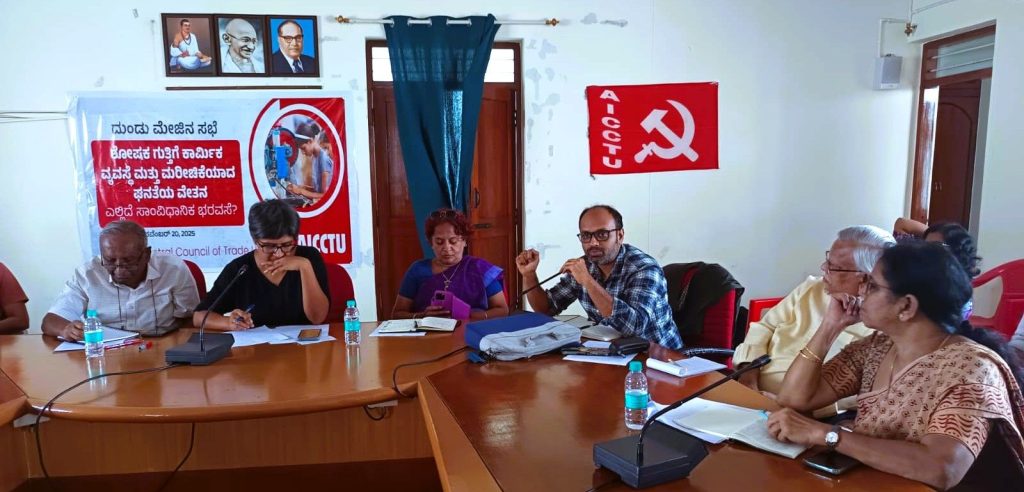
The round-table discussion, titled “Whither the Constitutional Promise? The exploitative contract labour system and the illusion of dignified wages,” was organized by the All India Central Council of Trade Unions (AICCTU). It brought together a diverse coalition of voices to highlight what they describe as a systemic crisis undermining the economic and social fabric of the nation.
A System of Exploitation and Discrimination
The central theme of the conference was the unequivocal condemnation of the contract labour system, which speakers argued is a primary tool for denying workers their fundamental rights.
Maitreyi Krishnan, State Secretary of AICCTU, set the tone by linking economic exploitation to deep-seated social hierarchies. “The contract labour system and the denial of minimum wages reinforce caste, class, and gender hierarchies by pushing Dalits, Adivasis, and women into the most insecure and underpaid work,” she stated. “This must be seen as a fundamental denial of social and economic equality.”
This sentiment was echoed by representatives from major public sector undertakings. Chandrashekar of the HAL Contract Workers Association detailed the persistent struggles faced by workers in core operations, who, despite decades of service, are not recognized as permanent employees and face delayed wages and inadequate social security.
Gender Injustice and a Beacon of Hope
The gendered dimension of this exploitation was a critical point of discussion. Dr. Prathiba R., President of GATWU, highlighted the stark disparity in the garment industry. “While minimum wages in many industries are being increased, garment workers’ wages remain unchanged. This is nothing but gender discrimination,” she asserted, pointing to a broader pattern of devaluing labour traditionally performed by women, such as that of ASHA, Anganwadi, and domestic workers.
Amid the condemnations, a powerful story of successful resistance offered a roadmap for hope. Smt. Maniyamma of the BBMP Pourakarmikara Sangha recounted the long struggle of pourakarmikas, predominantly Dalit women, who were once trapped in the same exploitative system.
“The historic struggle of pourakarmikas forced the State to finally throw out the contract system and bring us under direct payment,” she declared. This shift, followed by the regularization of their jobs, ensured minimum wages, social security, and a significant reduction in corruption. “All workers must take inspiration from this struggle and fight for dignified working conditions,” she urged.
Media Updates: +91-93531 21474 [WhatsApp] | indianowme@gmail.com
Broader Societal Consequences
Experts at the conference emphasized that the impact of this system extends far beyond the individual worker, crippling families and perpetuating inequality across generations.
Dr. Niranjanaradhya, a Child Rights Expert, connected precarious work to the future of children. “When families are trapped in low wages, irregular payments, and insecure jobs, they cannot afford even basic education for their children,” he explained. “This must be recognized as an issue that affects the entire family, children, and society itself, not just the worker.”
Dr. Sylvia Karpagam, a Public Health Expert, outlined the dire health consequences. She stressed that inadequate income directly undermines overall well-being, pushing entire communities into cycles of poor health and malnutrition.
Echoing the call for a collective societal response, Prof. Babu Matthew emphasized the urgent need to recognize the grave impact of the exploitative employment structure, which affects the broader social fabric. Challenging this system, he noted, is crucial to ensuring dignity, fairness, and justice.
A Call to Action
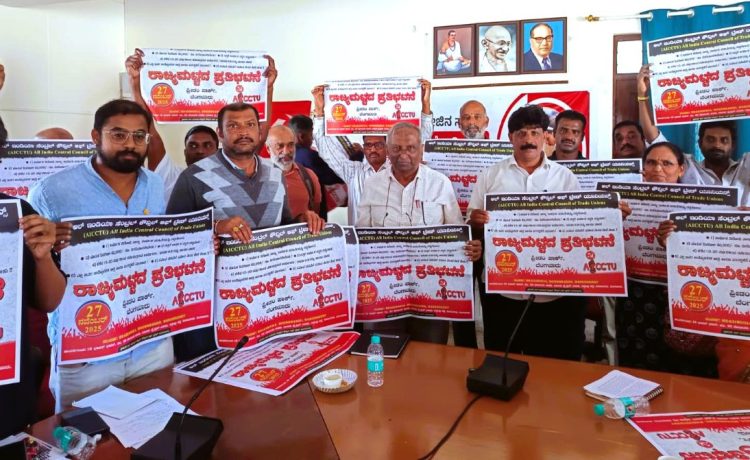
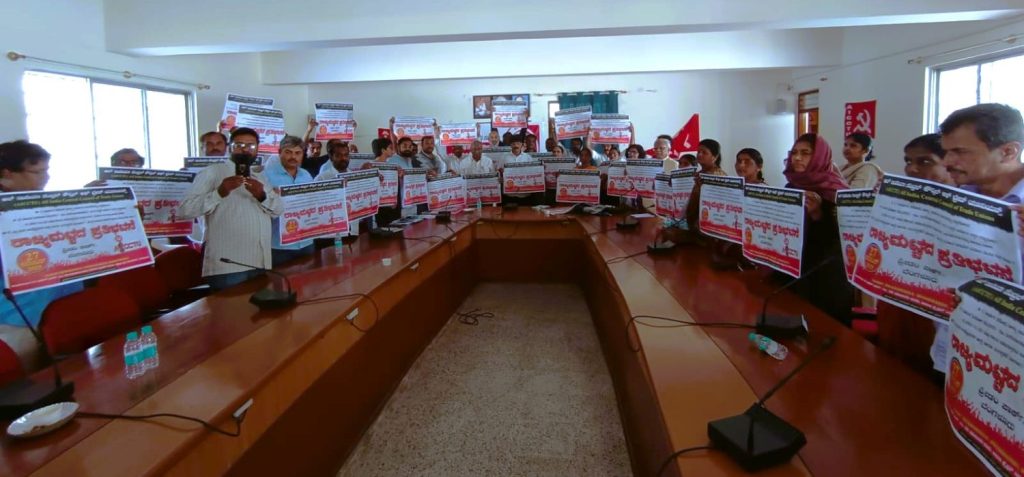
The conference culminated in a firm resolution to intensify the collective fight against the contract labour system. In a significant announcement, the AICCTU revealed plans for a state-wide protest on November 27, 2025.
The protests will formally call upon the Government to take three concrete steps: the abolition of the contract labour system, the regularization of all workers, and the urgent notification of a revised minimum wage of ₹42,000.
The gathering, which also included labour rights expert Mohan Mani and several academics, served as a potent rallying cry, signaling a renewed and unified movement for workers’ rights in Karnataka.
Key Quotes