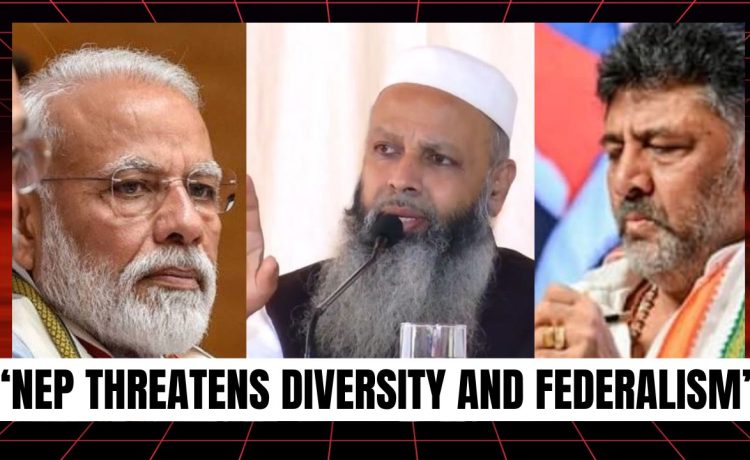
Wisdom Group CEO Condemns NEP 2020, Calls for Broad-Based Consultation
Bengaluru: Mohammed Fiaz Sharief, CEO of Wisdom Group of Institutions, has sharply criticized the National Education Policy (NEP) 2020, describing it as an imposed framework that undermines India’s cultural diversity and threatens the foundational principles of inclusive education. Condemning the manner in which the policy was introduced, Sharief said it lacked democratic consultation and public participation.
“The NEP is fundamentally flawed and unacceptable in any form,” Sharief stated. “Policies affecting millions of students cannot be imposed from the top without consulting stakeholders. This approach is unjust and dangerous for a diverse country like India.”
Concerns Over Cultural Imposition and Commercialization
Sharief warned that the NEP risks promoting cultural homogenization, which he said is incompatible with India’s pluralistic ethos. “India is home to multiple religions, cultures, and languages. No single culture can or should be imposed on everyone,” he said, rejecting what he termed the “saffronization” of education. He added that such moves would be resisted to protect constitutional values and social harmony.
He also flagged the commercial orientation of the policy as a serious concern. “Education is not a commodity. The commercial angle embedded in the NEP is dangerous and will widen inequalities rather than bridge them,” Sharief said, calling for a policy that prioritizes equity and access.
Fiaz Sharief, CEO, Wisdom Group of Institutions, rejects NEP 2020, calling it an imposed policy framed without expert consultation. He said the policy threatens India’s cultural diversity & promotes commercialisation of education#Bengaluru #NEP PM Modi Rahul Gandhi pic.twitter.com/hkuXTnhAnK
— Wisdom International School Richmond Town Bengalur (@wis_richmond) January 20, 2026
Media Updates: +91-93531 21474 [WhatsApp] | indianowme@gmail.com
Karnataka’s Stand and Nationwide Protests
Sharief’s remarks align with the Karnataka government’s firm opposition to the NEP. After assuming office, the Siddaramaiah-led Congress government scrapped the policy and initiated a State Education Policy through a committee chaired by former UGC Chairman Prof. Sukhdev Thorat. Recently, Primary and Secondary Education Minister Madhu Bangarappa reiterated this position at an education conclave in Tamil Nadu, strongly opposing the Centre’s policy.
Across the country, student organizations including AIDSO, NSUI, and AISA have held sustained protests demanding the withdrawal of NEP 2020, arguing that it is anti-student and anti-people.
Call for Inclusive Policy-Making
Sharief advocated a comprehensive consultation process involving religious leaders, cultural representatives, academicians, and educationists. “Only an inclusive dialogue can bring unity, peace, and justice, paving the way for genuine national progress,” he said.
He cited key reasons for rejecting NEP 2020, including privatization and commercialization, language-related concerns, the digital divide and infrastructure gaps, threats to federalism, and the risk of increased dropouts due to multiple exit options.
Key Quotes
-
“Education policy cannot be imposed without public consultation in a diverse democracy like India.”
-
“The commercialisation embedded in NEP 2020 risks turning education into a privilege instead of a right.”
-
“Imposing one culture through education violates the spirit of India’s pluralism.”
-
“A people-centric education policy is essential for unity, justice, and national progress.”
-
“ವೈವಿಧ್ಯಮಯ ಪ್ರಜಾಪ್ರಭುತ್ವದ ಭಾರತದಲ್ಲಿ ಸಾರ್ವಜನಿಕ ಸಲಹೆ ಇಲ್ಲದೆ ಶಿಕ್ಷಣ ನೀತಿ ಜಾರಿಗೆ ಬರಬಾರದು.”
-
“ಎನ್ಇಪಿ 2020 ರಲ್ಲಿರುವ ವಾಣಿಜ್ಯೀಕರಣ ಶಿಕ್ಷಣವನ್ನು ಹಕ್ಕಿನಿಂದ特ಾಧಿಕಾರವನ್ನಾಗಿ ಮಾಡುತ್ತದೆ.”
-
“ಒಂದು ಸಂಸ್ಕೃತಿಯನ್ನು ಶಿಕ್ಷಣದ ಮೂಲಕ ಹೇರಿಕೆ ಮಾಡುವುದು ಭಾರತದ ಬಹುಮುಖತೆಯ ಆತ್ಮಕ್ಕೆ ವಿರುದ್ಧ.”
-
“ಜನಪರ ಶಿಕ್ಷಣ ನೀತಿಯೇ ಏಕತೆ, ನ್ಯಾಯ ಮತ್ತು ರಾಷ್ಟ್ರೀಯ ಪ್ರಗತಿಗೆ ದಾರಿ.”