Arduino and IIT Delhi Launch ‘Invention Lab’ to Fuel India’s Physical AI Revolution
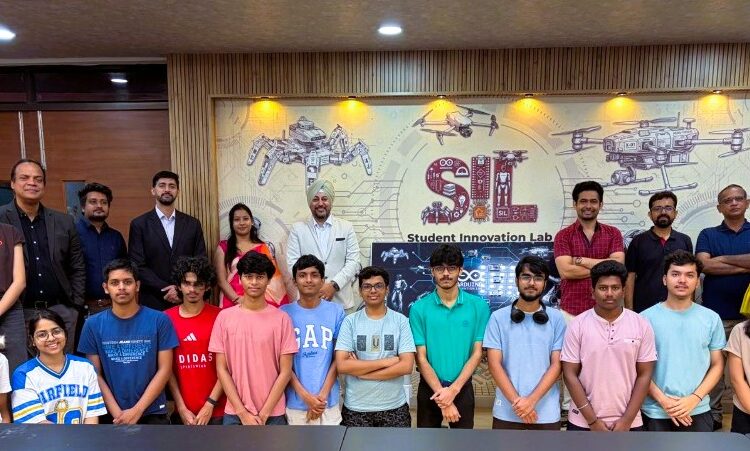
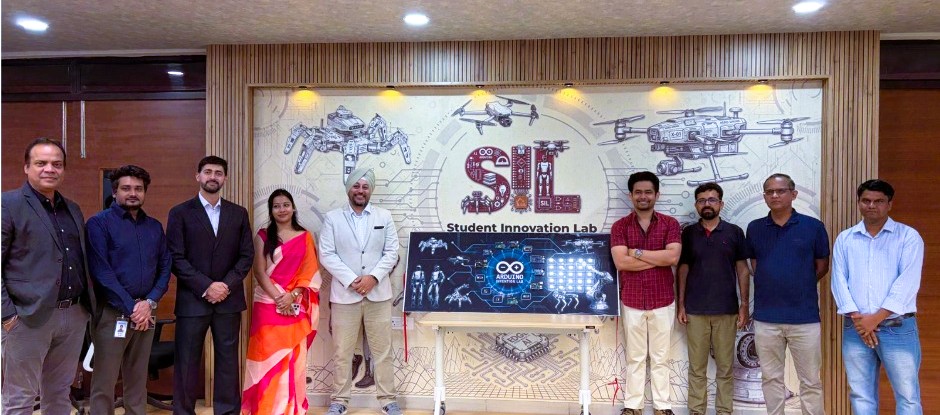
New Delhi — In a major boost to India’s tech ecosystem, open-source giant Arduino has established the Arduino® Edge AI Invention Lab at the Indian Institute of Technology (IIT) Delhi. Housed within the Department of Electrical Engineering’s Student Innovation Lab (SIL), this hub marks a significant expansion of Arduino’s ambitious “Physical AI for All” initiative, aimed at making cutting-edge Edge AI and Physical AI education accessible across the nation.
The state-of-the-art facility was officially inaugurated by Guneet Bedi, Senior Director of Sales at Qualcomm Technologies, Inc., during his visit to India. The launch event brought together prominent academic minds, including Prof. Shankar Prakriya, Head of the Department of Electrical Engineering at IIT Delhi, alongside professors Shubhendu Bhasin, Amartansh Dubey, and Kaushik Saha.
Bridging the Gap: Classroom to Real-World Impact
Conceived as a hands-on incubator, the new Invention Lab is set to transform how students engage with next-generation technologies. By moving away from purely theoretical frameworks, the hub prioritizes project-based learning, interdisciplinary research, competitive hackathons, and direct industry collaborations.
This launch aligns perfectly with India’s aggressive nationwide push toward artificial intelligence and future-tech infrastructure. Through its “Physical AI for All” blueprint, Arduino is seamlessly merging hardware deployment, digital learning platforms, and industry-aligned curricula to ensure students transition smoothly into high-impact careers.
“Arduino has spent more than two decades making technology accessible through open-source innovation,” noted Guneet Bedi during the inauguration. “With our Physical AI initiative, we are extending that mission by helping universities create hands-on learning environments where students can build the next generation of intelligent systems.”
For Media Updates: +91-93531 21474 [WhatsApp] | indianowme@gmail.com
A Growing National Network of Innovation
The milestone at IIT Delhi is not an isolated success but part of a rapidly widening national tapestry. Arduino has already successfully deployed similar innovation hubs at the Manav Rachna International Institute of Research & Studies, with upcoming rollouts slated for Adani University, the Symbiosis Institute of Technology, and Shiv Nadar School in Faridabad.
Reflecting on the profound academic synergy, Prof. Amartansh Dubey of IIT Delhi remarked, “This collaboration has the potential to spark a new wave of next-generation innovation in Physical AI applications by enabling students to translate ideas into impactful real-world solutions.”

Scaled Success and Future Horizons
The velocity of the “Physical AI for All” initiative has been remarkable. In just six months, the program has engaged more than 23,000 students, developers, and innovators across a massive network of over 300 higher education institutions. This was achieved through a rigorous execution of 100 workshops and bootcamps, alongside 25 specialized educator training programs that empowered more than 1,000 teachers.
To sustain this momentum, Arduino, in tandem with its education partner STEMLORE Innovators, has engineered a comprehensive, credit-based 120-hour Edge AI curriculum. This framework comes complete with laboratory manuals, tailored teaching materials, and specialized project kits designed to meet contemporary industry demands.
Looking ahead, Arduino is solidifying its long-term commitment to the Indian tech landscape by backing the creation of 10 dedicated Edge AI Centres of Excellence across major State Technical Universities. By intertwining these educational milestones with local manufacturing initiatives, Arduino is actively championing the national “Make in India” vision—cultivating a future-ready workforce and cementing India’s standing as a formidable global innovation powerhouse.
Key Quotes
“Arduino has spent more than two decades making technology accessible through open-source innovation. With our Physical AI initiative, we are extending that mission by helping universities create hands-on learning environments where students can build the next generation of intelligent systems.” — Guneet Bedi, Senior Director of Sales, Qualcomm Technologies, Inc.
“This collaboration has the potential to spark a new wave of next-generation innovation in Physical AI applications by enabling students to translate ideas into impactful real-world solutions.” — Prof. Amartansh Dubey, Department of Electrical Engineering, IIT Delhi