‘No to War – Yes to Peace’: Bengaluru Women Unite Globally to Weave Hope Amidst Rising Violence
Scores gather at BIFT Hall to condemn war, domestic abuse, and displacement, as children’s songs and a global peace expert’s voice amplify the call for nonviolence.
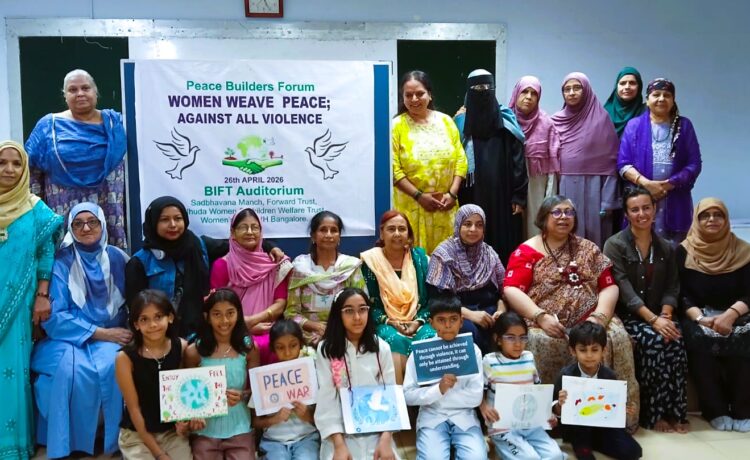
Bengaluru, April, 2026 – In a powerful display of collective grief, resilience, and unwavering hope, over a hundred women and peace activists filled the BIFT Hall at Darrussalam Building on Queens Road, transforming an ordinary afternoon into a stirring plea for humanity. From 3:00 PM to 5:30 PM, the gathering titled “Women Weave Peace – Against All Violence: No to War” resonated with raw emotion, urgent slogans, and a quiet, unshakable demand: stop the bloodshed, choose dialogue.
The event, organized by Sadhbhavana Mahila Manch in collaboration with the Peace Builders Forum India (PBFI) , saw an outpouring of solidarity. It was jointly supported by the FORWARD Trust, Women’s Wing JIH Bangalore, and Alhuda Women and Children Welfare Trust, alongside a coalition of independent women peace activists. Their mission was singular yet profound—to raise a united voice against war, whether fought on distant battlefields or within the fragile walls of homes.
Against the grim backdrop of a world on edge—especially the relentless destruction and human suffering across West Asia—the gathering felt less like a seminar and more like a shared lament turned into action. Speakers didn’t just talk geopolitics; they spoke of displacement, hunger, orphaned children, and the invisible scars of domestic violence that multiply during times of global crisis.
‘No to War – Yes to Peace’: Bengaluru Women, Children, and Global Experts Unite Against Violence at Home and Across Nations – Issue Urgent Appeal to World Leaders to Reject Militarism and Embrace Dialogue
The Children’s Quiet Revolution: Paintings That Pierced the Silence
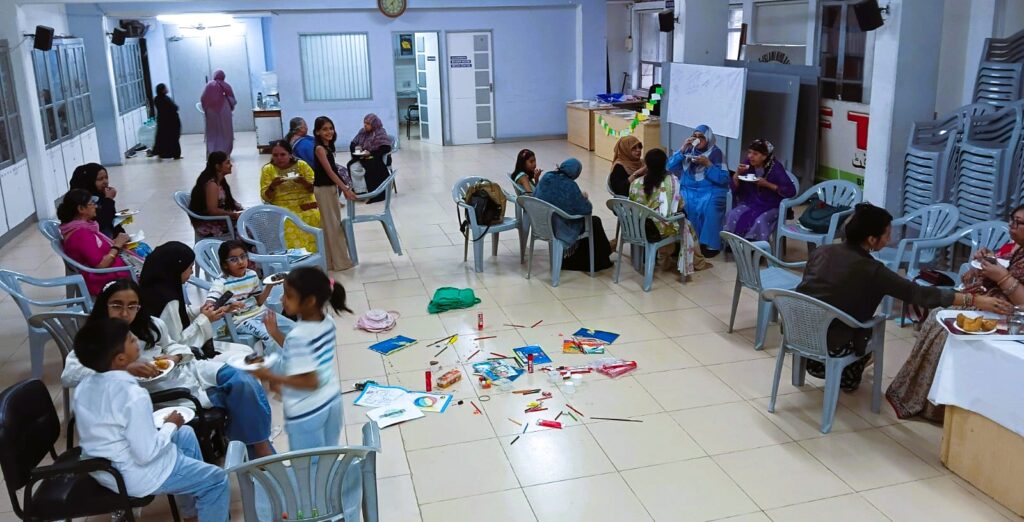
Perhaps the most moving segment of the afternoon came not from seasoned activists, but from the youngest participants. Children of all ages took center stage, not with speeches, but with splashes of color on canvas, trembling voices in song, and heart-tugging poems. Their drawings depicted smiling suns, shaking hands across borders, and bombed houses rebuilt as gardens. One child’s poem, recited softly, carried the refrain: “No to war – yes to peace.”
As the children sang, several women in the audience wiped away tears. Their presence was a profound reminder: in every conflict, it is children who suffer most—and yet, they carry the strongest, most irrational hope for a peaceful tomorrow.

From Local Trauma to Global Solidarity
Women from vastly different walks of life—writers, academicians, domestic workers, and survivors of abuse—shared powerful, unfiltered reflections. They spoke of violence as a continuum: the clenched fist inside a kitchen, the discriminatory word at a workplace, the missile that lands on a maternity ward thousands of miles away. Over and over, one truth emerged: peace is not merely the absence of war. It is the presence of justice, equality, dignity, and the courage to listen.
For Media Updates: +91-93531 21474 [WhatsApp] | indianowme@gmail.com
Adding an urgent global cadence to the local anguish, a Professor of Psychology and Cultural Studies, who also serves as Secretary of the Peace Research Council from Columbia, joined the gathering via a live bridge. In measured yet passionate remarks, he warned that “violence has become a shared language of failure.” He called for global solidarity as a moral necessity, not a political option, urging nations to stop fueling militarism and start funding reconciliation.
“War is a failure of imagination,” he said, as the hall nodded in agreement. “Peacebuilding is not weakness. It is the hardest, bravest work humans can do.”
A Declaration, Not a Request
As the afternoon sun slanted through the hall’s windows, the room rose to its feet. Through interwoven poetry, communal songs, and rhythmic slogans, the gathering issued a strong, unambiguous declaration: “No to War – Yes to Peace and Nonviolence.”
A formal appeal was adopted, addressed to world leaders—reject hatred, demilitarize hearts, and choose peaceful dialogue over destruction. The women of Bengaluru, bound by no single faith or politics but by a shared humanity, reiterated that nonviolence remains the strongest path to protect future generations.
One of the organizers, speaking on behalf of Sadhbhavana Mahila Manch, said: “When women weave peace, they don’t just stop wars. They build the fabric of a new society—where no child grows up fearing a bomb or a fist.”
As the gathering dispersed, the paintings remained on the walls—bright, defiant, hopeful. And for one evening on Queens Road, the world did not feel so far away, nor peace so impossible.