All India Milli Council Charts Renewed Course at National Executive Meeting in Bengaluru
Focus on organisational revival, legal advocacy, education, and interfaith harmony amid a moment of collective reflection
Bengaluru: The All India Milli Council (AIMC) on Friday used its national executive meeting in Bengaluru as a moment of both introspection and resolve, outlining an ambitious roadmap to strengthen the organisation, address legal challenges faced by minorities and marginalised communities, and promote education and interfaith dialogue across the country.
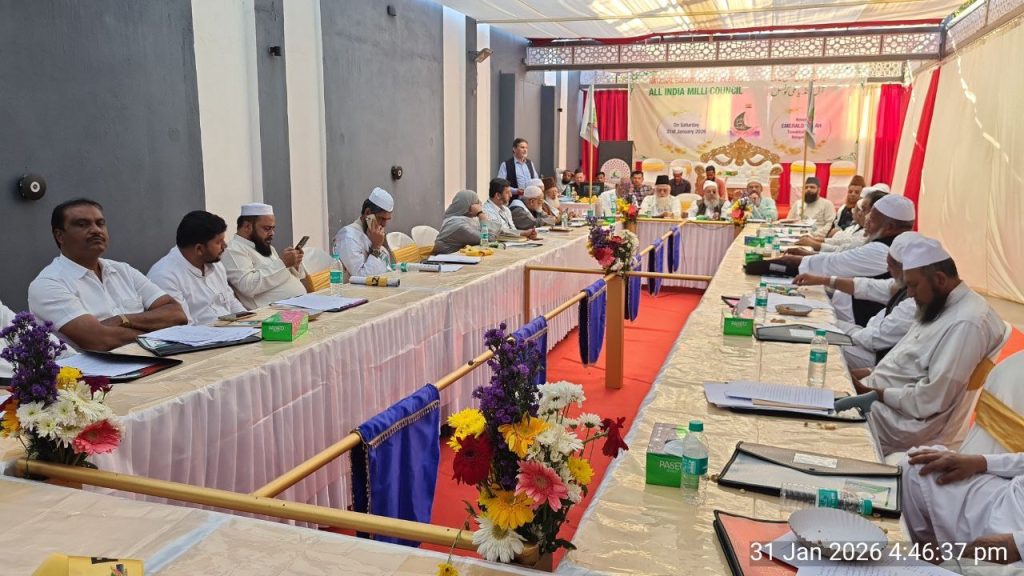
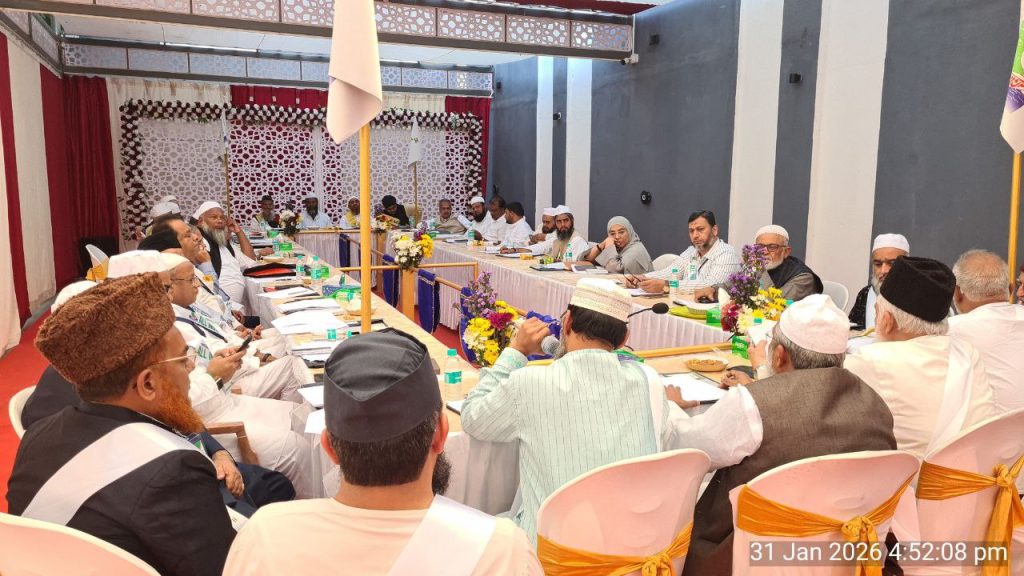
At a time of profound transition and renewed responsibility, the All India Milli Council (AIMC) held its National Executive Committee meeting in Bengaluru, bringing together office-bearers, scholars and representatives from across the country to chart a clear roadmap for organisational strengthening, legal intervention, educational advancement and interfaith harmony. The meeting combined reflection with resolve, underscoring the need to move decisively from intent to action amid evolving social and political challenges.
Meeting Marked by Loss and Resolve
The national executive was convened against the backdrop of the recent passing of two towering figures of the organisation—Hazrat Ameer-e-Shariat Karnataka Salis Maulana Sageer Ahmed Khan, Patron of the AIMC, and Dr Manzoor Alam, its General Secretary. A large condolence meeting held in Bengaluru saw scholars and intellectuals from across India paying tribute to their lifelong commitment to justice, unity and community service.
Recalling their legacy, leaders emphasised that the most fitting tribute would be to strengthen the institution they nurtured and to advance its mission with renewed seriousness and sincerity.
Organisation at a Critical Juncture
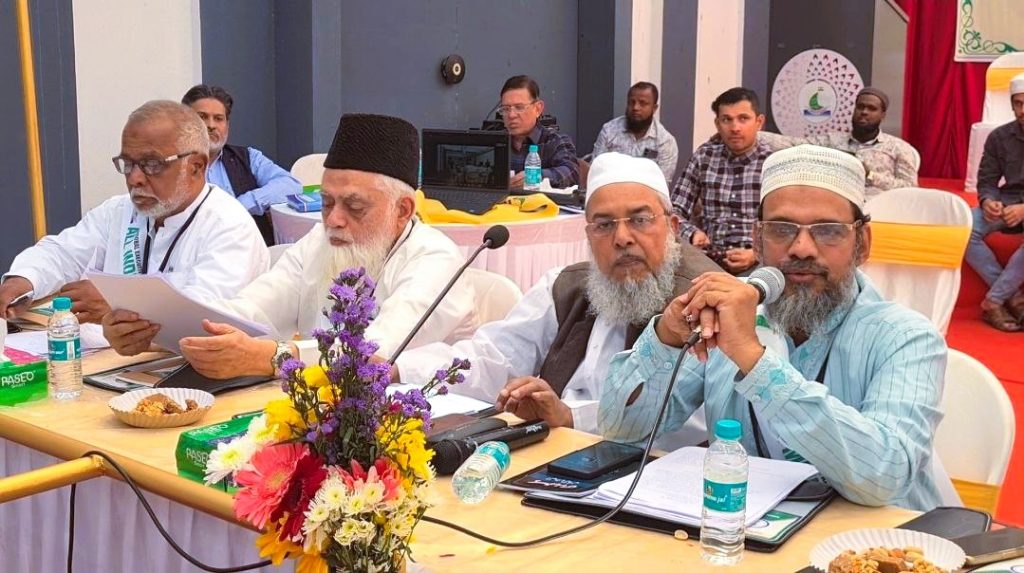
Addressing the gathering, Sulaiman Khan, Assistant General Secretary of the AIMC, struck a candid and introspective note, reminding members that the present moment demands concrete action rather than rhetoric. “We have gathered at a very delicate juncture where time demands not words, but sustained and visible action,” he said, urging members to assess honestly whether the Council is fully prepared to meet its founding objectives in changing national circumstances.
He pointed out that while the country’s social, political and economic challenges have intensified for minorities, the relevance of a proactive organisation like the AIMC has correspondingly increased. “Resolutions and press statements alone do not change realities. Change comes when organisations step into the field and work with commitment,” Khan said.
Need to Revitalise AIMC’s Functional Wings
A significant portion of the deliberations focused on internal functioning. Khan acknowledged with concern that despite the AIMC having 13 departments and four permanent committees, only a few are consistently active. Workshops held in Hyderabad and Bengaluru over the past two years had aimed to energise these bodies, but the desired momentum remains elusive.
Recalling the vision of late Dr Mansoor Alam, Khan said the comprehensive structure of departments and committees was created after deep deliberation, even when Dr Alam’s health was failing. “He believed this division of work would not only strengthen the Council but also fulfil the dream of meaningful community development. We cannot allow this vision to remain on paper,” he said.
Accountability and Ground-Level Engagement
Echoing this sentiment, Moulana Mohammed Shafiq Qasmi, Assistant General Secretary, emphasised that an organisation is recognised by the performance of its departments, not by its name alone. “The community is looking towards us for guidance. If we do not awaken now, history will not forgive us,” he said, calling for regular self-assessment and accountability.
Leaders agreed on the need to move beyond closed-door meetings and “drawing-room politics” to sustained grassroots engagement, with clear short-term and long-term targets. A proposal to review departmental performance every 15 days and to ensure active participation in both online and offline meetings was reiterated as a practical roadmap to revive institutional discipline.
Focus on Legal Justice and Advocacy
The executive also reaffirmed a major initiative envisioned during Dr Alam’s lifetime—the All India Advocates Conference scheduled to be held in Delhi on May 10. Adv. Afsar Jahan, Secretary of the Department of Legal Aid, said the conference would focus on systemic delays and obstacles in the justice delivery process, particularly affecting minorities, Dalits and other oppressed sections.
“Our objective is to bring together legal minds from across the country to examine these challenges comprehensively and to evolve strategies that ensure timely and fair justice,” she said.
Education and Interfaith Dialogue as Core Priorities
Education emerged as another key pillar of discussion, with leaders stressing its role in empowerment and long-term social stability. Mohammed Fiaz Sharief of AIMC Karnataka highlighted the need for strategic planning to expand educational initiatives, particularly for youth.
Equally central was the Council’s commitment to interfaith dialogue. Moulana Naushad Alam Qasmi, President of AIMC Karnataka, said structured dialogue between Hindu and Muslim communities would be initiated in every state to address misunderstandings and reduce mutual suspicion. “This is not a symbolic gesture. It is a fundamental objective we intend to implement with sincerity this year,” he said.
Supporting this approach, Moulana Abdul Aleem Qasmi and Moulana Anees ur Rahman Qasmi, Vice Presidents of the AIMC, underlined that dialogue, education and justice must go hand in hand to build trust and social harmony.
A Call for Unity and Renewed Commitment
Youth engagement was also highlighted, with Moulana Dr Abdul Malik Mughaisi, Convenor of the All India Milli Youth Organization, calling for greater involvement of young people in social initiatives and organisational work. “If every department becomes a powerhouse of activity, the impact will be visible across society,” he said.
As the meeting concluded, there was a shared sense that the Bengaluru executive should mark a turning point. Leaders called upon every department to prepare a clear calendar of activities within the next 15 days and to demonstrate tangible progress within six months.
The gathering ended on a note of optimism and resolve, with participants expressing faith that with unity, accountability and sincere effort, the All India Milli Council can renew its role as a constructive, inclusive and forward-looking voice for justice, harmony and national cohesion.