National

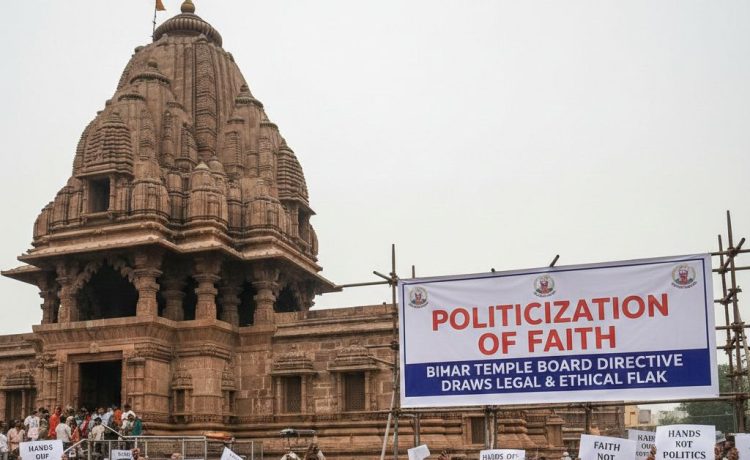
Bihar’s Temple Trustees Directed to Celebrate Former PM’s Birthday, Igniting Controversy

Bihar Religious Trust Board Directive Sparks Debate Over Politicization of Temples

State-appointed board orders monasteries to observe former PM’s birthday, raising legal and ethical questions about the separation of religion and politics.

By Swami Raghavendra | Coordinator, Satya Dharma Samvad

PATNA — The Bihar State Board of Religious Trusts (BSBRT), a government body tasked with managing Hindu temples and monasteries, has ignited controversy by instructing registered religious institutions to celebrate the birth anniversary of former Prime Minister Atal Bihari Vajpayee. The directive, issued by its newly appointed chairman, has drawn sharp criticism from sections of the clergy and observers who allege it blurs the line between spiritual governance and political agenda-setting.

The board’s order mandates that monasteries mark December 25 as “Prakharata Diwas” (Day of Zeal) in honor of Vajpayee. Officials have reportedly contacted temple authorities, instructing them to hold ceremonies and subsequently mail photographic proof of the observance to the board’s office.

A History of Turbulent Oversight

The BSBRT was established to oversee, register, and maintain records of properties belonging to Bihar’s myriad religious trusts, which dot a state historically known for its abundant monasteries—the very basis of its name, ‘Bihar’. For decades, the board’s operations have been mired in allegations of corruption, with past governments accused of facilitating the illegal transfer and sale of monastic lands, treating them as private fiefdoms of politically connected mahants, or head priests.

Media Updates: +91-93531 21474 [WhatsApp] | indianowme@gmail.com

The appointment of former IPS officer Acharya Kishore Kunal as chairman in 2006 under Chief Minister Nitish Kumar’s regime brought hopes of reform. While some laws were amended, critics claim the core issues persisted, with management of major trusts merely shifting to allies of the new administration. Kunal himself later faced allegations of misconduct from several mahants, underscoring the board’s contentious role.

A Revealing Gathering and a Contentious Order

The current chairman, Professor Ranbir Nandan, a former JD(U) MLC and now seen as a BJP-aligned figure, organized a large conclave of mahants and religious leaders on September 18 in Patna. Chief Minister Nitish Kumar attended briefly to light a lamp before departing. The event, however, was later used by BJP-JD(U) leaders for political messaging, promising to liberate encroached temple lands.

The recent “Prakharata Diwas” order has, however, cast the board’s actions in a starker light. Legal experts and religious figures point to the board’s own governing laws, which prohibit political activities within temple and monastery precincts.

“This decision is neither legally appropriate under the Bihar State Board of Religious Trusts Act nor justifiable from a socio-religious perspective,” argued Swami Raghavendra, a religious affairs commentator. “Atal Bihari Vajpayee was, purely, a political figure. Celebrating his birthday in a religious institution seems part of an agenda to grant social-religious acceptability to certain political figures.”

Legal and Ethical Implications

The directive sets a potentially problematic precedent, opponents warn. “If tomorrow a government of another party orders the celebration of its leader’s birthday in temples, what moral ground will we have to object?” questioned a Patna-based mahant who wished to remain anonymous. “Politics and religion are separate. Our institutions should observe the anniversaries of religious personalities, not political leaders or prime ministers.”

The board’s move is seen by critics as indicative of a broader trend where state-controlled religious bodies are leveraged for political purposes. It has forced even those religious leaders supportive of the ruling alliance into a corner, compelled to comply under administrative pressure.

A Broader Pattern

Analysts see this as part of a wider pattern where the line between religious sentiment and political mobilization is increasingly blurred. “It is unfortunate that Hindu religious heads are being compelled to celebrate a politician’s birth anniversary and provide photo evidence under government pressure,” Swami Raghavendra added. “The sanctity and dignity of religious institutions must remain above the ebb and flow of political regimes.”

The board has not yet issued a public response to the growing criticism. The controversy highlights the enduring challenges in managing Bihar’s vast religious estate and raises fundamental questions about the autonomy of spiritual spaces in a charged political landscape.


Key Quotes

  • Swami Raghavendra, Commentator: “This decision is neither legally appropriate under the Board’s Act nor justifiable from a socio-religious perspective. It seems part of an agenda to grant social-religious acceptability to certain political figures.”

  • Anonymous Mahant (Criticizing the order): “Politics and religion are separate. Our institutions should observe the anniversaries of religious personalities, not political leaders. What moral ground will we have to object if another party does this tomorrow?”

  • Implied Official Stance (from the order): The Board has instructed registered monasteries to observe “Prakharata Diwas” and submit photographic proof of the celebration.

    • ಸ್ವಾಮಿ ರಾಘವೇಂದ್ರ: “ಈ ನಿರ್ಣಯ ಬಿಹಾರ ರಾಜ್ಯ ಧಾರ್ಮಿಕ ನ್ಯಾಸ ಮಂಡಳಿ ಕಾಯ್ದೆಯ ದೃಷ್ಟಿಯಿಂದ ಉಚಿತವಲ್ಲ, ಸಾಮಾಜಿಕ-ಧಾರ್ಮಿಕ ದೃಷ್ಟಿಯಿಂದ ಸಮರ್ಥನೀಯವೂ ಅಲ್ಲ. ಇದು ಕೆಲವು ರಾಜಕೀಯ ವ್ಯಕ್ತಿಗಳಿಗೆ ಸಾಮಾಜಿಕ-ಧಾರ್ಮಿಕ ಸ್ವೀಕಾರ್ಯತೆ ನೀಡುವ ಒಂದು ಕ್ರಮದ ಭಾಗ ಎನಿಸುತ್ತದೆ.”

    • ಅನಾಮಧೇಯ ಮಹಂತ: “ರಾಜಕೀಯ ಮತ್ತು ಧರ್ಮ ವಿಭಿನ್ನವಾಗಿದೆ. ನಮ್ಮ ಸಂಸ್ಥೆಗಳು ಧಾರ್ಮಿಕ ವ್ಯಕ್ತಿಗಳ ಜಯಂತಿ ಆಚರಿಸಬೇಕು, ರಾಜಕೀಯ ನೇತಾರರದ್ದಲ್ಲ. ನಾಳೆ ಬೇರೆ ಪಕ್ಷವು ಇದೇ ರೀತಿ ಮಾಡಿದರೆ ನಿಲುವು ತೆಗೆದುಕೊಳ್ಳಲು ನಮ್ಮಲ್ಲಿ ನೈತಿಕ ಆಧಾರವೇನು ಇರುತ್ತದೆ?”

    • ಮಂಡಳಿಯ ಆದೇಶ (ಸಾರಾಂಶ): ನೋಂದಾಯಿತ ಮಠಗಳು “ಪ್ರಖರತಾ ದಿವಸ” ಆಚರಿಸಿ, ಅದರ ಫೋಟೋಗಳನ್ನು ಮಂಡಳಿಗೆ ಸಲ್ಲಿಸಲು ನಿರ್ದೇಶಿಸಲಾಗಿದೆ.

1. स्वामी राघवेन्द्र (विश्लेषक):
“यह निर्णय न तो बिहार राज्य धार्मिक न्यास बोर्ड अधिनियम की कानूनी दृष्टि से उचित है, न ही सामाजिक-धार्मिक दृष्टि से। यह कुछ राजनीतिक व्यक्तित्वों को सामाजिक-धार्मिक स्वीकार्यता प्रदान करने के एजेंडे का हिस्सा प्रतीत होता है।”

2. एक मौन महंत (आलोचक):
“राजनीति और धर्म अलग-अलग हैं। हमारी संस्थाओं को धार्मिक व्यक्तित्वों की जयंती मनानी चाहिए, न कि राजनीतिक नेताओं की। अगर कल किसी दूसरे दल की सरकार ऐसा करे, तो हमारे पास आपत्ति जताने का कोई नैतिक आधार नहीं रह जाएगा।”

3. बोर्ड के आदेश का सार:
पंजीकृत मठों-मंदिरों को “प्रखरता दिवस” के रूप में पूर्व प्रधानमंत्री अटल बिहारी वाजपेयी की जयंती मनाने और इसकी फोटोग्राफिक सबूत बोर्ड कार्यालय में भेजने का निर्देश दिया गया है।

Loading

News Desk
the authorNews Desk

Leave a Reply