Karnataka Unveils Maiden Skill Policy, Aims to Become Global Talent Hub
Bengaluru, Sept 25: In a landmark move to fuel economic ambitions, Karnataka has launched its first-ever Skill Development Policy, charting a strategic course from 2025 to 2032 to transform the state into a global nucleus for a skilled workforce and propel its vision of becoming a $1 trillion economy by 2032.
The policy, approved by the state cabinet, marks a significant step in formalizing and streamlining the state’s approach to human capital development. While the Department of Skill Development, Entrepreneurship and Livelihood (SDEL) was established in 2017, the state had until now operated without a comprehensive policy framework.
A Unified, Tech-Driven Vision
Central to the new policy is the aggressive adoption of digital technologies. A unified digital portal will leverage Artificial Intelligence (AI) for training, assessment, and career guidance, creating an efficient ecosystem for skill development. The policy also sets its sights on international opportunities, emphasizing global certifications and support for workforce mobility and migration.
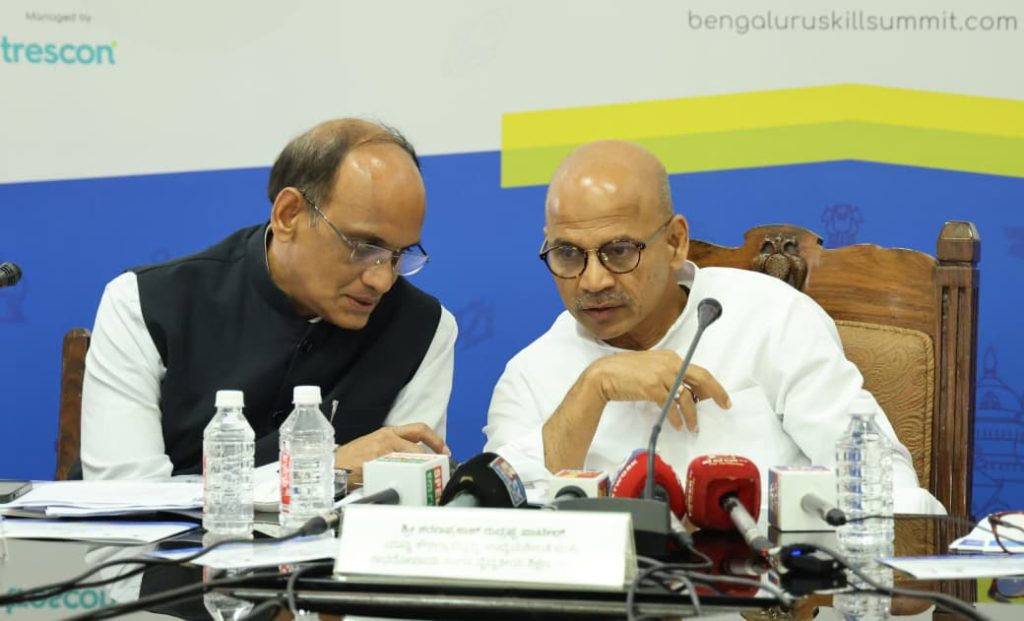
Dr. Sharanprakash Patil, Minister for Medical Education, Skill Development, Entrepreneurship & Livelihood, highlighted the critical need for the policy. “The absence of a policy framework meant that skilling efforts were often fragmented across multiple departments,” he stated. “With the growing demand for a skilled workforce to meet state, national and global needs, there was an urgent requirement to streamline and integrate initiatives under a common vision and strategy.”
Integrating Skilling into Academia and Industry
A key operational shift will be the integration of vocational education into the mainstream academic fabric. The policy mandates the introduction of credit-based programmes in schools, colleges, and universities, aiming to make skill acquisition a core part of education.
Industry collaboration is another cornerstone. The policy promotes apprenticeships, industry-led training, and the adoption of Industrial Training Institutes (ITIs) by corporations to ensure training aligns with real-world job requirements. This focus on lifelong learning, reskilling, and upskilling is designed to keep the workforce agile amidst rapid technological change.
Ensuring Inclusivity and Robust Infrastructure
The policy outlines special interventions to ensure equitable access to skilling for women, persons with disabilities, marginalized communities, and the informal workforce. On the infrastructure front, it promises the modernization of ITIs, expansion of Government Tool Room and Training Centres (GTTCs), and the establishment of new skilling hubs in rural and urban areas.
To ensure accountability, a robust Monitoring and Evaluation (M&E) framework will be implemented, with 5% of all scheme budgets earmarked for this purpose.
Media Updates: +91-93531 21474 [WhatsApp] | indianowme@gmail.com
Umbrella Scheme for a Life-Cycle Approach
All state skilling programmes—such as Kalike Jothege Kaushalya, Nanna Vrutti Nanna Ayke, and others—will be unified under the Chief Minister’s Kaushalya Karnataka Yojane (CMKKY) 2.0. This umbrella scheme will adopt a life-cycle approach to skilling, from initial training to career progression.
Minister Dr. Patil concluded, “The Karnataka Skill Development Policy 2025–2032 addresses this gap by aligning skilling with education, employment, and industry requirements, while also ensuring inclusivity, equity, and future readiness.” The policy represents a comprehensive blueprint to harness the state’s demographic dividend for sustained economic growth.