‘Authority Is Responsibility, Not a Throne’: CM D.K. Shivakumar Urges Officials to Work with Conscience, Transparency and Compassion
CM calls for transparent, conscience-driven administration, directs officials to resolve public grievances within law; warns there will be no compromise on corruption, fake bills or manipulation of records
Bengaluru: Karnataka Chief Minister D.K. Shivakumar on Tuesday called upon the State’s 5.5 lakh government employees to work collectively as “Team Karnataka”, respond sensitively to citizens’ problems and leave behind a legacy of clean, efficient and people-centric governance.
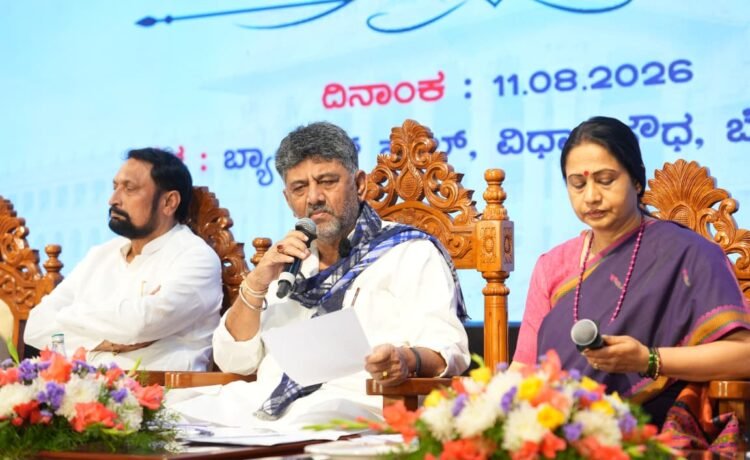
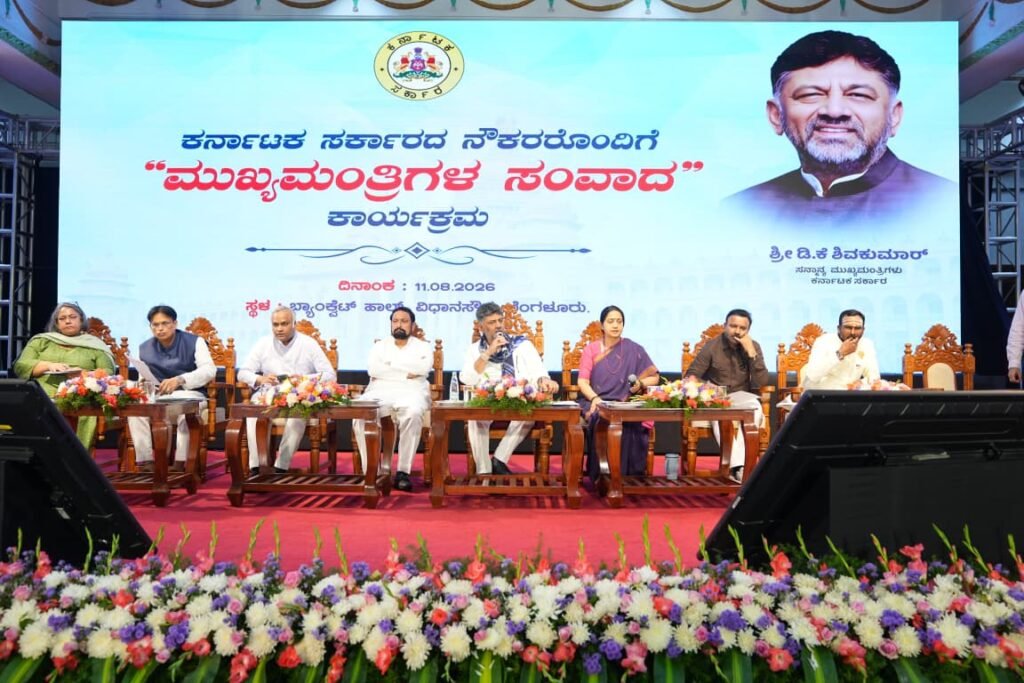
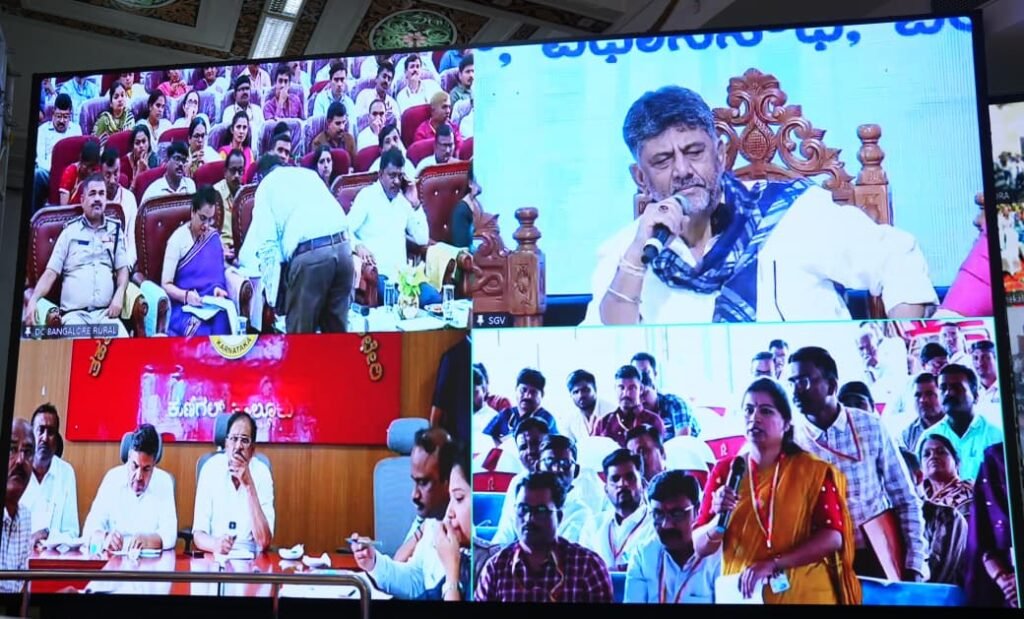
Addressing government employees at an interaction held at Vidhana Soudha’s Banquet Hall, Shivakumar said ministers and officials were all public servants entrusted with an opportunity to improve people’s lives.
“I, my ministers and officials are all government employees. We are Team Karnataka. Let us work together. Our goal must be to respond to people’s problems and ensure their welfare,” he said.
‘Our Work Will Remain’
Recalling Karnataka’s administrative legacy from Kengal Hanumanthaiah and Sir M. Visvesvaraya to successive governments, Shivakumar said every administration had contributed according to its experience and philosophy.
“I do not want to criticise those who came before us. Criticism dies, but our work remains,” he said, adding that government employees serve as the crucial bridge between citizens and the administration.
Invoking B.R. Ambedkar’s emphasis on understanding history, Shivakumar said: “I do not wish merely to read or write history; I want to create history. What matters is the evidence of our work that we leave behind.”
He attributed Karnataka and Bengaluru’s progress not to any single government, but to decades of governance, the vision of the erstwhile Mysuru Maharajas, educational institutions, talented students and skilled human resources.

‘Authority Is Responsibility, Not a Throne’
Calling for conscience-driven governance, Shivakumar told officials that power should never be viewed as privilege.
“Authority is a symbol of responsibility; it is not a throne, but an opportunity. Even if your work does not satisfy everyone else, work in a manner that satisfies your conscience,” he said.
He said the government would review how officials and legislators function at the taluk level and stressed that officers should remain at their designated headquarters and regularly visit areas under their jurisdiction to understand ground realities.
Through the proposed Praja Seve mechanism, district ministers and legislators should periodically visit taluks and hoblis to resolve grievances within the legal framework, he said. Local problems, he stressed, should be settled locally rather than pushed from one office to another.

Property Records, Guarantees and Youth
Shivakumar said around 25 lakh e-Khatas in Bengaluru and free property records for rural residents represented a major citizen-centric reform. Calling it the government’s “sixth guarantee”, he directed officials to expand the initiative statewide within the next six to seven months.
He also welcomed the government employees’ association’s decision to voluntarily give up guarantee benefits and said eligibility was being scrutinised to prevent misuse.
Highlighting the principle of “sharing and caring”, Shivakumar said public service should protect the poor, secure citizens’ hard-earned property and empower young people. He described the Bharat Jodo Yuva Sangha initiative as an effort to encourage youth participation, talent and awareness about national service.
‘No Compromise on Corruption’
Issuing a stern warning against financial malpractice, Shivakumar said corruption, duplicate billing, fabricated bills and manipulation of official records would not be tolerated.
“There will be no compromise on corruption. I will examine every step taken by officials. There is no place for double bills or fake bills,” he warned.
He said property records were being digitised to curb tampering and directed officials to maintain beneficiary-level information and monitor how government assistance is utilised.
Taluk-level officers must also share their daily schedules with senior officials, while revenue and cooperative authorities exercising quasi-judicial powers must ensure their decisions do not result in injustice, he said.
“Do not succumb to anybody’s pressure. Work transparently and with a clean conscience,” Shivakumar told employees, adding that he would visit every taluk after the Assembly session. He also directed officials to ensure participation of all schools, including private institutions, in Independence Day programmes.