

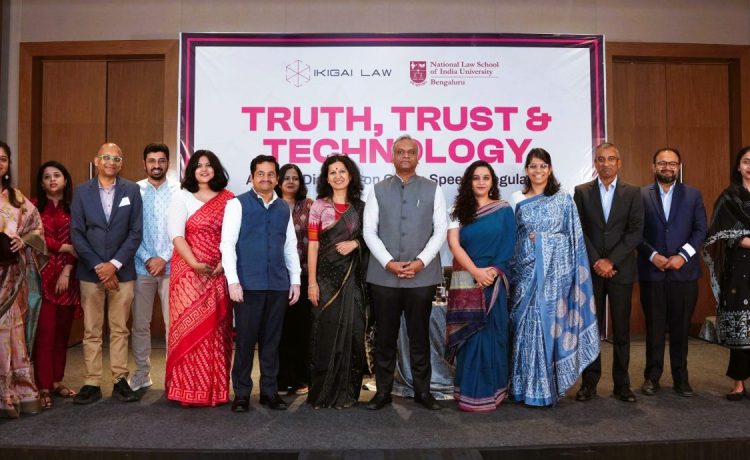
‘Name, Shame Those Spreading Falsehoods, Not Curb Free Speech’: Priyank Kharge on Karnataka’s Proposed Misinformation Bill
Bengaluru | 7 November, 2025
By INDIA NOW Bureau
Karnataka Plans Legal Framework to Curb Misinformation
Karnataka Minister for IT/BT and Rural Development & Panchayat Raj, Priyank Kharge, announced that the State Government is preparing to introduce a comprehensive Disinformation Bill during the upcoming Belagavi Winter Assembly Session in December 2025.
Speaking at the Policy Dialogue on “Truth, Trust & Technology” organised jointly by Ikigai Law and the National Law School of India University (NLSIU), Bengaluru, Kharge emphasised that the proposed Bill is not aimed at curbing free speech or satire, but at naming and shaming those who deliberately spread falsehoods and at holding digital platforms accountable for amplifying harmful content.
ಕರ್ನಾಟಕದ “ತಪ್ಪುಮಾಹಿತಿ ವಿಧೇಯಕ”: ಸುಳ್ಳು ಹರಡುವವರನ್ನು ಬಯಲು ಮಾಡಿ, ಮಾತು ಸ್ವಾತಂತ್ರ್ಯ ಕಸಿಯಬೇಡ — ಪ್ರಿಯಾಂಕ್ ಖರ್ಗೆ
“Disinformation is extremely dangerous because of its intentional and corrosive nature,” said Kharge. “Technology has magnified this threat — with accessible and affordable AI tools, anyone can now create deepfakes, clone voices, or fabricate documents that appear authentic. A single click can spark chaos.”
He added that the government seeks to bring online platforms under the same legal framework as individuals spreading misinformation. “All we seek is to bring these platforms and the laws of the land under one umbrella. They cannot escape accountability by claiming ignorance,” Kharge asserted.
Media Updates: +91-93531 21474 [WhatsApp] | indianowme@gmail.com
Balancing Truth and Free Expression
The dialogue, attended by legal experts, scholars, and media professionals, centred on one critical question — Who defines the truth, and how can misinformation be tackled without undermining free expression?
The first panel, “Regulating Speech in Karnataka: A Constitutional Tug of War”, examined the constitutional boundaries of speech regulation, highlighting that any such law must adhere to Article 19(1)(a), which guarantees freedom of speech, and Article 19(2), which allows only “reasonable restrictions.”
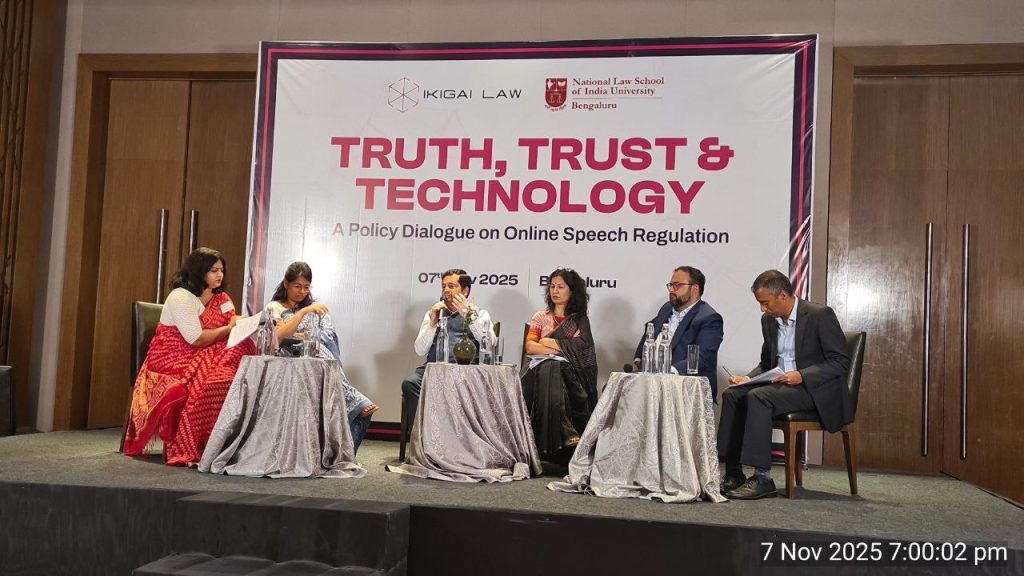
Manu Kulkarni, Partner at Poovayya & Co, cautioned against overreach:
“The biggest problem with the current approach is that the government wants to be the arbiter of truth. That’s difficult to digest. The central government tried it through a fact-check unit, but the Bombay High Court struck it down. Regulations should target only those who cause actual harm — anything beyond that strikes at the root of democracy.”
Sudhir Krishnaswamy, Vice Chancellor of NLSIU, echoed this view, urging that laws shift away from criminalisation and instead focus on civil liabilities for individuals and platforms.
Alok Kumar Prasanna, Co-Founder of Vidhi Centre for Legal Policy, said India’s overreliance on criminal law was misplaced.
“Criminal action here begins with an arrest and ends with bail. There’s no focus on convictions because institutions don’t exist. The real issue is educational — we’re not taught to think critically. The harder, but necessary, solution is to foster critical thinking instead of policing opinions.”
Practical Challenges of Enforcing Misinformation Laws
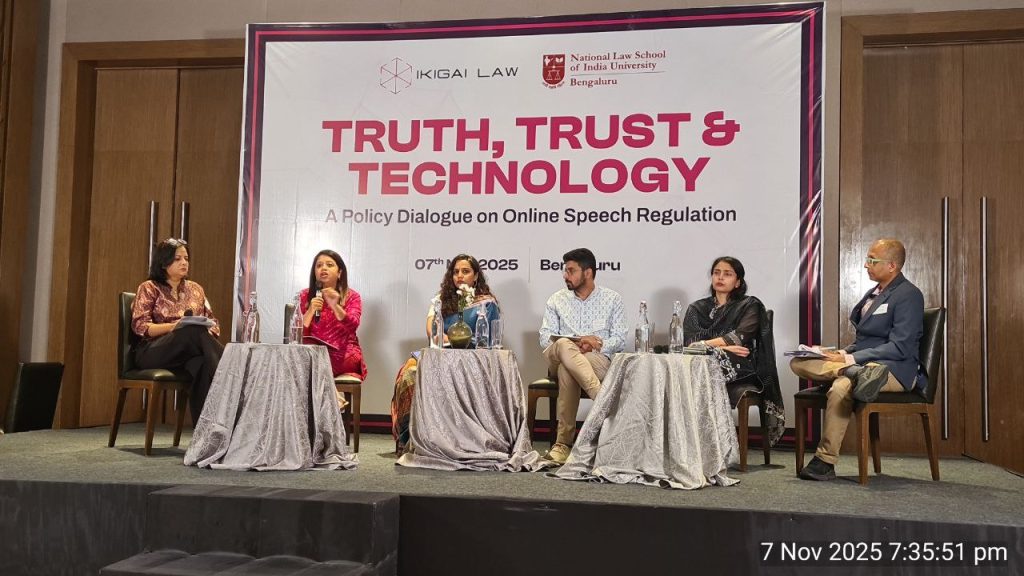
The second panel, “Tackling Misinformation in Practice: Risks, Responsibilities, and Alternatives”, explored the logistical and ethical complexities of implementing such legislation. Experts questioned whether state-level authorities could realistically monitor or prosecute online falsehoods, given the global nature of digital communication and the immense volume of online content.
“ತಪ್ಪುಮಾಹಿತಿ ವಿರೋಧ ಕಾನೂನು ಬೇಕು, ಆದರೆ ಪ್ರಜಾಪ್ರಭುತ್ವಕ್ಕೆ ಧಕ್ಕೆಯಾದರೆ?” — ಮಾಧ್ಯಮ ತಜ್ಞರ ಚಿಂತನೆ
Dhanya Rajendran, Co-Founder of The News Minute, expressed strong reservations about the Bill’s potential misuse.
“The idea sounds good, but implementation can easily turn repressive. Look at what happened after the Congress government came to power — three national anchors were booked, and most cases fizzled out. This Bill, if passed, could allow authorities to target journalists or YouTubers who criticise the government. It’s a dangerous precedent,” she warned.
Siddharth Narrain, Associate Professor at NLSIU, drew attention to global parallels.
“Countries like Singapore, those in the EU, and Australia have experimented with such laws, but they’ve all faced intense debate and criticism. Even at the UN level, the issue of defining disinformation remains unresolved. The key question remains — who decides what constitutes misinformation?” he asked.
A Tightrope Between Accountability and Control
While acknowledging the need for checks on misinformation, several panelists agreed that excessive state control could have chilling effects on journalism and public discourse. The consensus emerging from the dialogue was that regulation must be proportionate, transparent, and constitutionally sound.
As Karnataka moves towards tabling the Misinformation Bill, stakeholders from media, academia, and civil society urged the government to consult widely, avoid overcriminalisation, and ensure that the fight against disinformation does not turn into a weapon against dissent.
Kharge, while firm on the state’s intention to act against malicious actors, reassured critics that the government values free expression:
“We have no intention of curbing free speech, creativity, or satire. But those who knowingly spread lies that harm people or institutions must face consequences.”
Here’s a complete set of impactful headlines, subheadlines, powerful quotes, and a Q&A summary drawn from the article — formatted for a professional news feature or print/online layout.
💬 Key Quotes
Priyank Kharge, Minister for IT/BT & Rural Development
- “Disinformation is extremely dangerous because of its intentional and corrosive nature. With accessible AI tools, anyone can now create deepfakes, clone voices, and fabricate documents that look real.”
- “A single click can spark chaos. Our goal is to name and shame those who spread falsehoods — not curb free speech, satire, or opinion.”
- “All we seek is to bring platforms and individuals under one legal umbrella. They cannot escape accountability by claiming ignorance.”
- “We have no intention of curbing free speech or creativity, but those who knowingly spread lies that harm others must face consequences.”
Manu Kulkarni, Partner, Poovayya & Co
- “The biggest problem with the current approach is that the government wants to be the arbiter of truth. That’s difficult to digest.”
- “Regulations should target only those who cause actual harm — anything beyond that strikes at the root of democracy.”
Sudhir Krishnaswamy, Vice Chancellor, NLSIU
- “The focus should shift away from criminalisation. We need to think in terms of civil liabilities for both individuals and platforms.”
Alok Kumar Prasanna, Co-Founder, Vidhi Centre for Legal Policy
- “Criminal action in India starts with an arrest and ends with bail. The real issue is education — we’re not taught to think critically.”
- “The hard solution is to build citizens who question information, not punish those who express opinions.”
Dhanya Rajendran, Co-Founder, The News Minute
- “The Bill sounds good on paper, but in practice it could become a tool to silence journalists.
When criticism of the government is treated as misinformation, democracy itself is at risk.”
Siddharth Narrain, Associate Professor, NLSIU
- “Globally, countries like Singapore, Australia, and those in the EU have struggled to define disinformation.
Even at the UN level, the question remains — who decides what the truth is?”
❓ Key Q&As
Q1. What is Karnataka’s proposed Misinformation Bill about?
A: The Bill aims to regulate and penalise deliberate spreaders of misinformation, disinformation, and fake news, and to hold social media platforms accountable for amplifying such content. It will likely be tabled in the Belagavi Winter Assembly Session in December 2025.
Q2. Does the Bill threaten freedom of speech?
A: According to Minister Priyank Kharge, no. The government intends to “name and shame” those spreading lies but not restrict creativity, satire, or opinion. However, media experts warn that its implementation could inadvertently curb free expression.
Q3. Why is such a law considered necessary now?
A: With affordable AI tools enabling creation of deepfakes, voice cloning, and forged documents, the spread of falsehoods has become easier and more harmful. The government sees a need to hold both individuals and platforms accountable.
Q4. What constitutional issues are being discussed?
A: Legal experts emphasised that any such law must respect Article 19(1)(a) (freedom of speech) and the reasonable restrictions under Article 19(2). Overreach could violate constitutional safeguards.
Q5. What concerns have experts raised?
A:
- Overreach and misuse: Experts fear the Bill could empower authorities to target journalists or dissenting voices.
- Defining truth: Determining what constitutes “false” information remains contentious.
- Enforcement complexity: Monitoring millions of online posts daily is resource-intensive and jurisdictionally difficult.
Q6. What were the main recommendations from the panel?
A:
- Move away from criminal law–based enforcement.
- Introduce civil or platform-level liability instead of arrests.
- Encourage media literacy and critical thinking education to combat misinformation at its roots.
Q7. How do other countries handle disinformation laws?
A: Internationally, countries like Singapore, Australia, and some in the European Union have enacted similar legislation, often drawing backlash over free speech concerns. Global legal debates continue over how to define and regulate misinformation without state overreach.
Q8. What’s next for Karnataka?
A: The State Government plans to table the Bill during the Winter Session in Belagavi. Priyank Kharge has assured that public consultations and expert reviews will continue before finalisation.











Hello there! I know this is kinda off topic however , I’d figured I’d ask. Would you be interested in trading links or maybe guest authoring a blog post or vice-versa? My website discusses a lot of the same subjects as yours and I believe we could greatly benefit from each other. If you happen to be interested feel free to shoot me an e-mail. I look forward to hearing from you! Awesome blog by the way!