Indian Knowledge Systems Can Shape Management, Innovation and Leadership in AI Era: JAIN CMS Conference
‘Purana, though of the past, is always new and eternal’
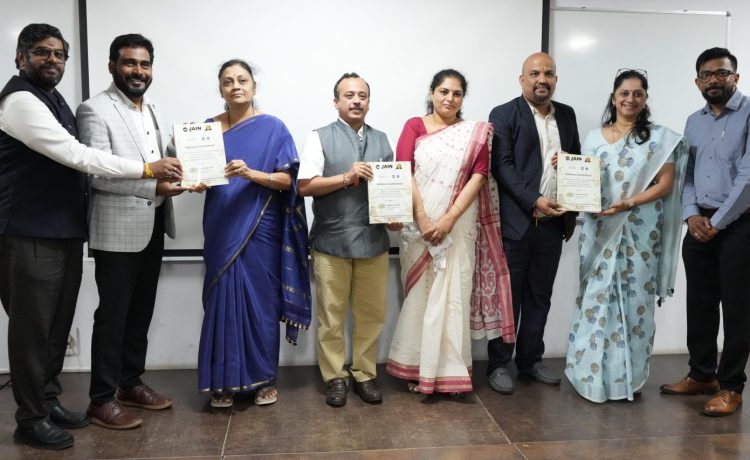
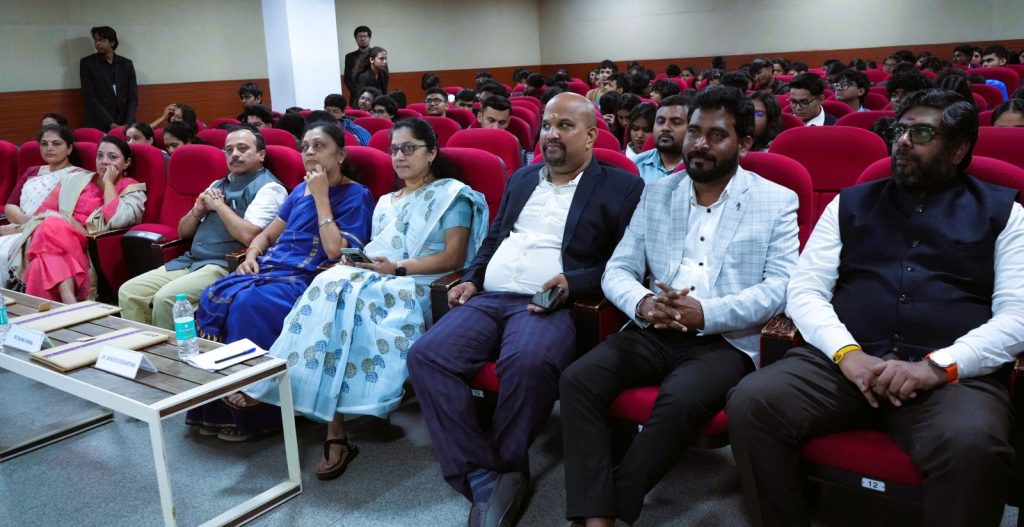
Bengaluru, September 4, 2026: The Center for Management Studies (CMS), JAIN (Deemed-to-be University), hosted a two-day National Conference on “Global Relevance of Indian Knowledge Systems in Management: Driving Business, Innovation, and Leadership in the 21st Century” at its Lalbagh Road campus in Bengaluru.
The conference brought together academicians, researchers, industry professionals and students from universities across India, including Sanskrit University, Shirdi University, Central University of Tamil Nadu and Pondicherry University. Discussions focused on how Indian Knowledge Systems (IKS) can contribute to contemporary management, business, innovation and leadership, particularly in an era shaped by artificial intelligence.
Ramayana lessons for modern strategic thinking
Guest of Honour Anil Srinivas Chilla, IKS expert and author of The Ramayana Guide to Practical Leadership, drew on Kabandha’s counsel to Rama in the Ramayana to explain the six strategic principles of Shadgunya: Sandhi, Vigraha, Asana, Yana, Samsraya and Dvaidhibhava.
“There are six strategic options in this world by which every critical situation can be rigorously assessed,” Chilla said, explaining how these principles can be applied to present-day business and technology. He cited Google and Samsung’s alliance that contributed to the rise of Android, as well as the ongoing AI race among technology companies, as examples of modern strategic choices.
Leadership begins with self-governance
In his keynote address, Prof. Dr. Vinayachandra Banavathy, Director of Communications and Director of the Centre for Indian Knowledge Systems at Chanakya University, said leadership must begin with understanding oneself.
“Leadership begins with understanding our strengths, recognising where our passion lies, and finding a sense of purpose that enables us to contribute meaningfully,” he said. Referring to the Bhagavad Gita, he added, “Can I lead myself before I lead others?”
Dr. Sangeeta Devanathan, Deputy Dean-Academics and Head of Institution, JAIN (Deemed-to-be University), said IKS should be studied through the questions that shaped ancient thought. “The question is not what our ancestors said, instead it’s about what they were asking,” she said, adding that “IKS should not be reduced to celebrated books, but should be approached as a living knowledge tradition.”
Learning through experience and self-mastery
Conference Chair Dr. Rajani Jairam, Dean-Student Affairs, JAIN (Deemed-to-be University), described IKS as “experiential, experimental, and participatory learning.” Citing Gajashastra, she explained how students traditionally lived with elephants to understand them through direct experience. “Purana, the very word means though it is of the past, it is always new and eternal,” she said.
Dr. Shraddha Kanwar, Chief Academic Officer, JAIN (Deemed-to-be University), highlighted self-mastery as a key distinction in Indian approaches to knowledge. “Where Western knowledge systems talk about the mastery of knowledge which is external, Indian knowledge systems talk about mastery of oneself,” she said. Urging participants to question rather than accept ideas blindly, she added, “Between believers and seekers, please be seekers.”
Conference Convener Dr. Lakshman K said the discussions connected India’s intellectual heritage with present-day corporate practices. “Today, we understood how our history is connected to the corporate world,” he said.
The conference received more than 75 registrations, with over 45 offline and around 35 online presentations, he added.