Citizens Rally in Bengaluru as Legal Experts Warn of ‘Electoral Siege’
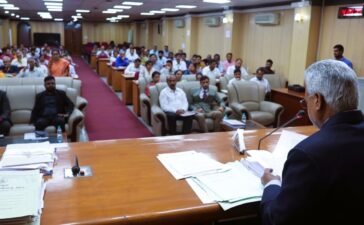
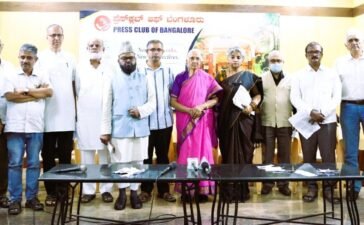
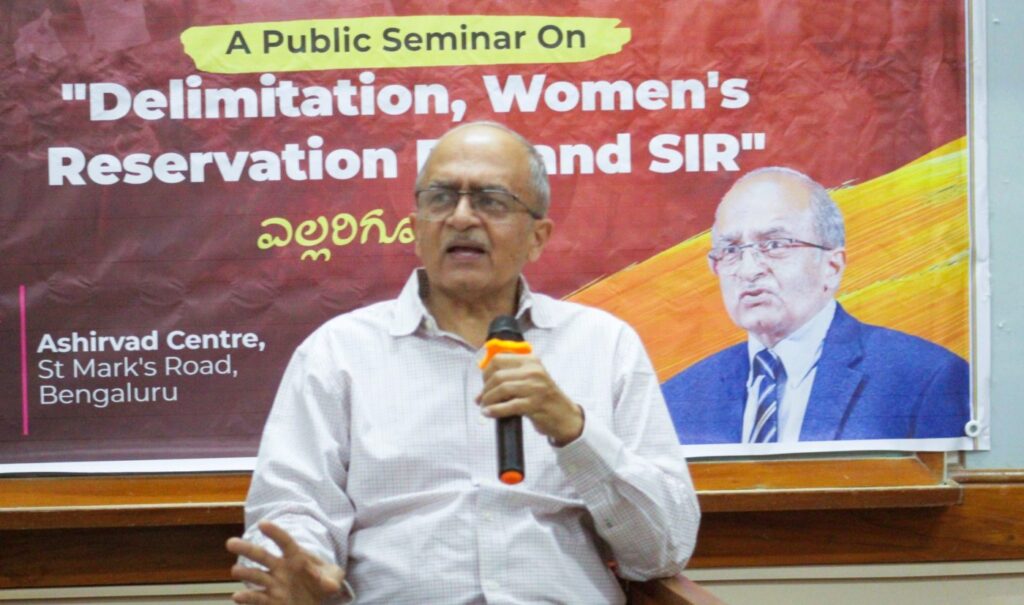
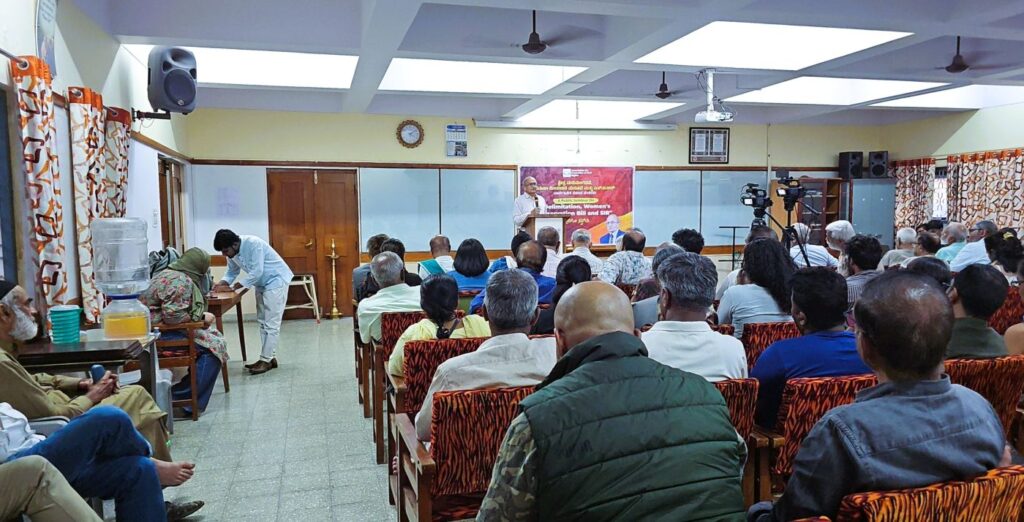
BENGALURU – At a gathering on Sunday at the Ashirvad Centre, prominent legal minds, farmers, and social activists issued a stark warning: the fundamental right to vote in India is under a quiet but systemic assault. The discussion, centered on the Special Information Report (SIR) process, delimitation, and the Women’s Reservation Bill, painted a picture of a democracy struggling to maintain its integrity against institutional manipulation.
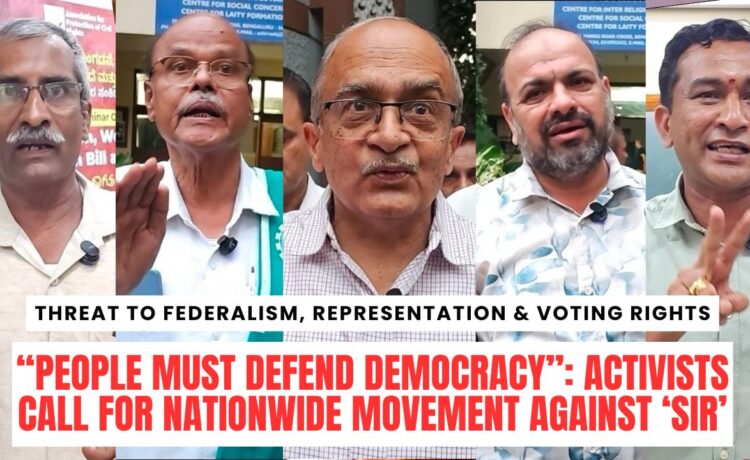
Advocate Prashant Bhushan, a Senior Advocate of the Supreme Court, told the assembly that the very foundations of the electoral system are currently suspect. He argued that the transparency once guaranteed by the Election Commission has vanished, replaced by processes that appear designed to silence specific sections of the population.
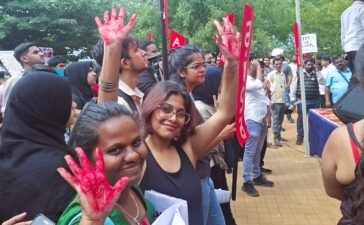
“Our electoral democracy is under siege today,” Bhushan said. “We are living under a mere pretense of democracy. Because institutions like the voter rolls and the Election Commission have become highly suspect, citizens must launch a people’s movement on the streets to stop the hijacking of our rights.”

Targeted Deletions and Legal Overreach
A primary focus of the meeting was the SIR exercise. Bhushan alleged that in West Bengal alone, 91 lakh voters—largely from the Muslim community—were targeted for removal. He argued that while the Representation of the People Act allows for the revision of lists, it does not authorize the wholesale elimination of existing rolls to create entirely new ones. He described the process in states like Bihar as a “harassment tactic,” where millions were served generic notices forcing them to prove their eligibility on short notice.
Sudhir Kumar Murolli, an advocate at the Karnataka High Court, echoed these concerns, noting that the SIR process is riddled with flaws that directly benefit the ruling party.
“The Supreme Court must intervene in cases where winning margins are smaller than the number of deleted votes,” Murolli stated. “When an SIR monitoring officer becomes a special duty officer for a Chief Minister, it suggests a link that destroys public trust. India is in a dire situation where the fundamental essence of democracy is being dismantled.”
Federalism and the Delimitation Debate
The discussion also tackled the government’s decision to link the Women’s Reservation Bill with the Delimitation Act. Bhushan dismissed this as a political maneuver intended to shift Lok Sabha seat power away from southern states toward the north.
“If the government were serious about women’s empowerment, they could have enacted reservation immediately in the current 543-member house,” Bhushan noted. “Instead, they have turned it into a deceitful game and a farce on democracy.”

A Call for a New Independence Movement
For those representing the backbone of the country, the stakes feel even more personal. Veerasangayya, a farmer activist, noted that 540 farmer organizations are now closely scrutinizing the SIR process, fearing it will disenfranchise the poor, Dalits, and minorities.
“There is no justice for farmers and laborers in Parliament anymore,” Veerasangayya said. “People in 8 lakh villages are at risk of losing their voice over minor clerical errors. This situation is worse than the 1977 Emergency. The only way forward is for us to unite and build a massive public movement.”
Ramegowda, a former RSS leader, offered a blunt assessment of how modern technology is being used to erode the secret ballot. He claimed that because officials now know exactly how many votes each party receives at specific booths, they can systematically remove names from areas that do not support the government.
“The Election Commission is effectively working to keep the ruling party in power,” Ramegowda remarked. “The Constitution is being undermined. Protests and court cases are no longer enough. We need a movement on the scale of the independence struggle to remain democratic voters.”
Activist Tanveer Ahmed concluded the session by calling the current state of Indian democracy “shameful,” urging candidates across party lines to boycott a system that he described as stage-managed and laughable. The consensus among the speakers was clear: without a unified social audit of electoral rolls and a grassroots uprising, the right to vote may soon become a relic of the past.